Moka Pot Coffee
Caffettiera moka (also “moka” or “macchinetta”) Say MOH-kah (Italian: kahf-fet-TYEH-rah MOH-kah)
Coffee made in a three-part stovetop pot: water boils in the base, pressure of about 1–2 bar pushes it through a basket of ground coffee, and strong coffee collects in the top chamber. Stronger than filter coffee, gentler than espresso.
- ServedHot
- In EnglishStovetop coffee maker coffee
- TastesBitter, Bold, Rich
About Moka Pot Coffee
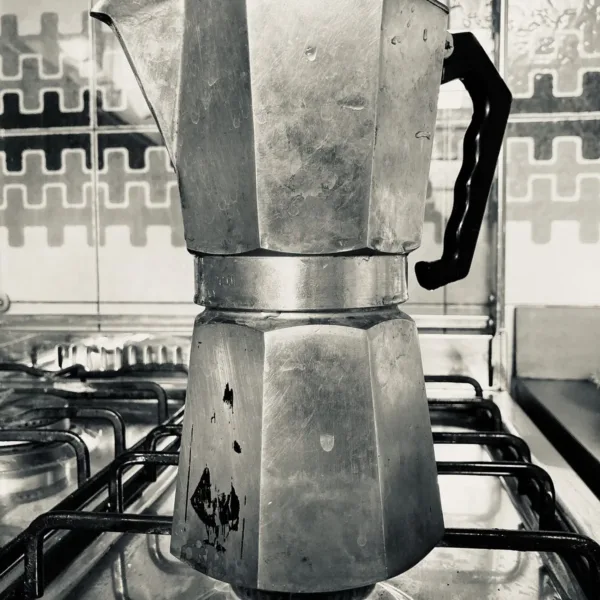
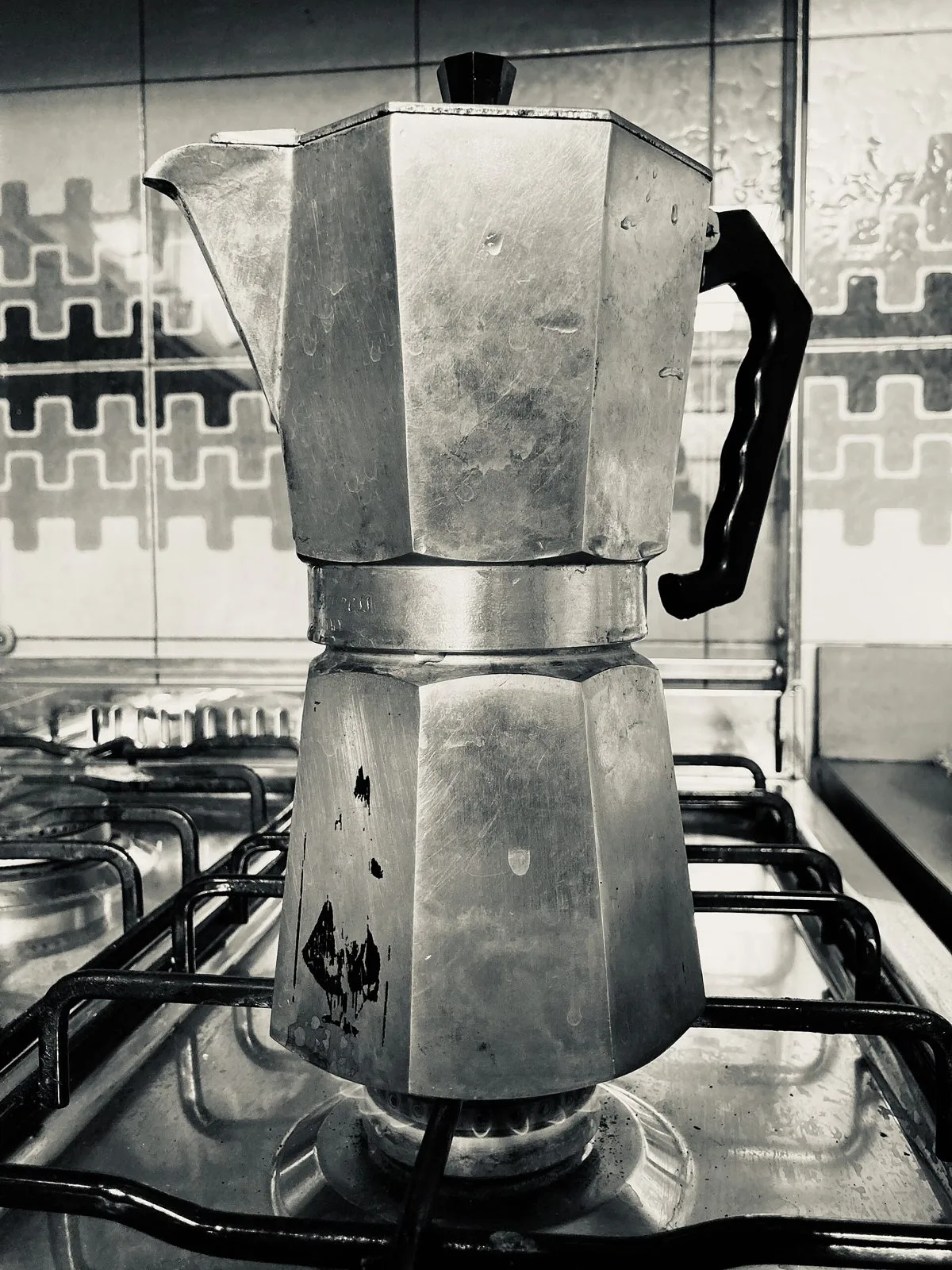
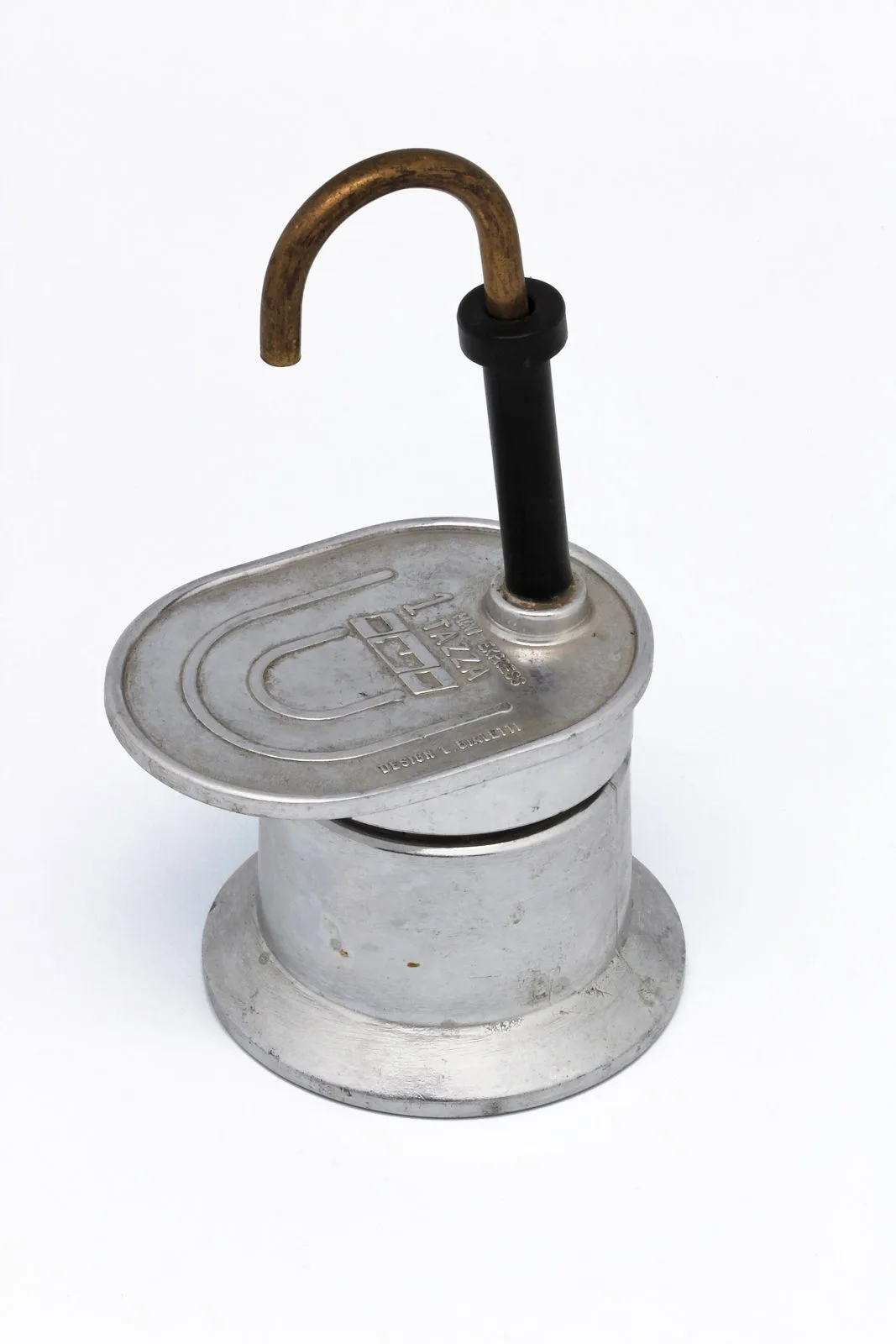
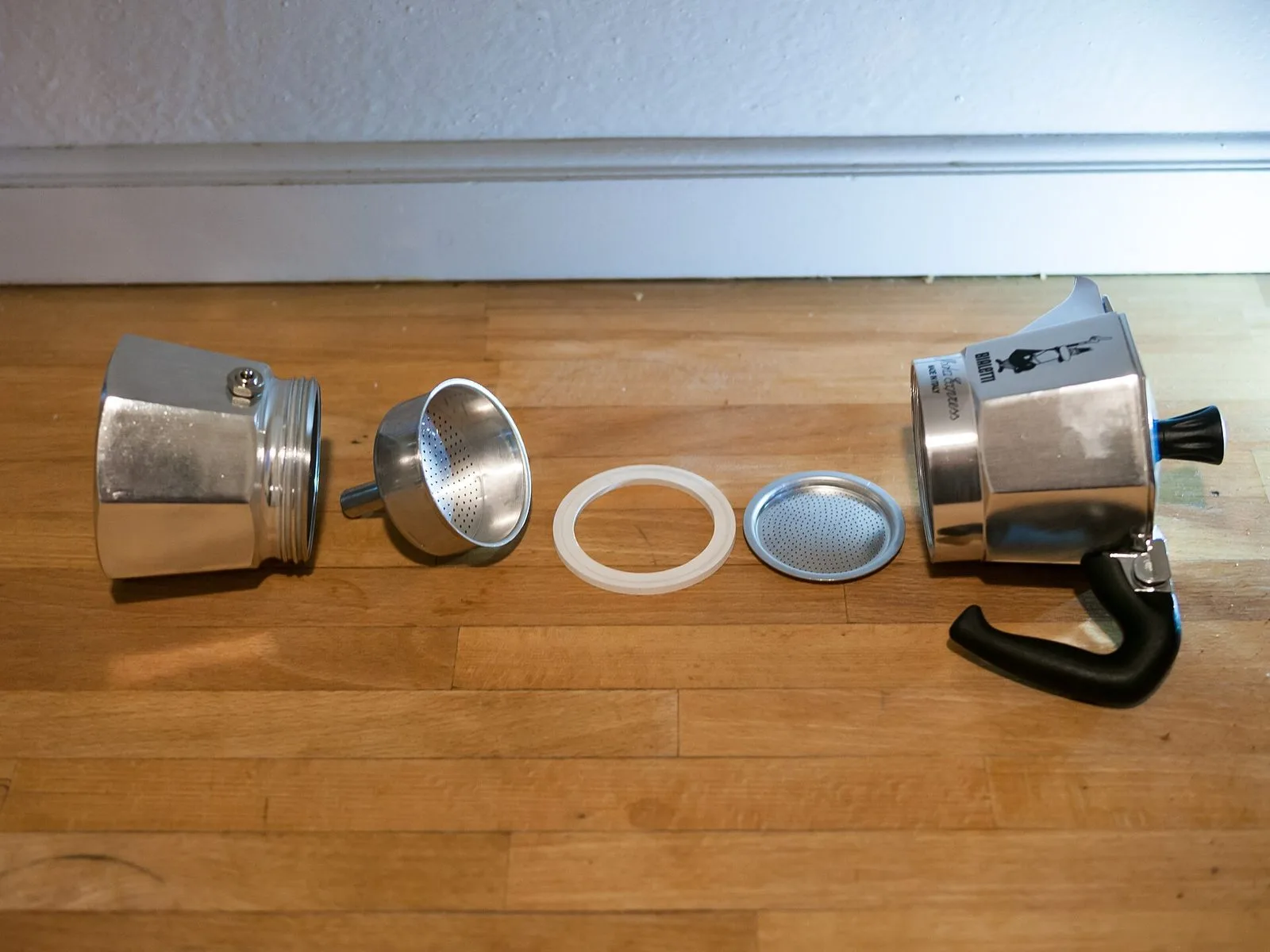
A moka pot is an eight-sided (on the classic model) aluminium or steel pot in three parts: a lower chamber for water, a funnel-shaped basket for ground coffee and an upper chamber that collects the finished brew. As the water heats, the pressure of steam and expanding air in the base pushes it up through the coffee and out of a spout into the top, where it gathers with a soft gurgle.
The coffee is strong, dark and full-bodied – often called “stovetop espresso” – but it is not true espresso. A moka pot works at roughly 1–2 bar instead of the 9 bar of an espresso machine, so the result has little or no crema and a slightly rougher, more robust taste. Many people drink it short and black with sugar, or use it as the base for milk drinks at home.
In Italy the moka is the coffee maker of the home kitchen, just as the espresso machine rules the bar. It is also widely used across Europe, Latin America and Australia, and its design has become so iconic that examples sit in the collections of MoMA and London’s Science Museum.
In the cup
- Light foam 8%
- Moka coffee 92%
Ingredients
- Ground coffee (fine, slightly coarser than espresso)≈ 15–17 g for a 3-cup pot
- Water (pre-heated if you like)to just below the safety valve, ≈ 150 ml
- Sugar (optional)to taste
How to make it
You needMoka pot (aluminium or stainless steel), stove or induction plate (with an induction-ready pot), small cups
RatioFill the basket level without tamping – roughly 15–17 g coffee to ≈ 150 ml water in a 3-cup pot (about 1:9–1:10)
-
Fill the base with water up to just below the safety valve (hot water from a kettle shortens heating time).
-
Fill the funnel basket with ground coffee and level it off without pressing it down.
-
Wipe stray grounds from the rim and screw the top on firmly.
-
Put the pot on low to medium heat with the lid open so you can watch.
-
When coffee starts to flow, keep the heat low; once it turns pale and begins to gurgle, take it off the heat.
-
Stir the coffee in the top chamber and serve straight away.
Origin & history
Pressure-driven stovetop brewers existed in the 19th century – Samuel Parker received a patent in 1833 for a tabletop machine that is seen as a precursor – but the moka pot as we know it is credited to Alfonso Bialetti, an aluminium worker from Piedmont who had set up his own workshop in Crusinallo by 1919.
Bialetti began selling the Moka Express in 1933. Sales were slow at first; it took off after his son Renato took over the business and ran a large advertising campaign after the Second World War. In 1952 the company commissioned its mascot, l’omino con i baffi – the little man with a moustache – which still appears on every pot.
The moka became one of the symbols of Italian domestic life and of Italian industrial design. A 2010 study calculated that 90% of Italian families owned a Bialetti moka pot, and the design is held in museum collections including MoMA and London’s Science Museum.
Variations
- Moka Expressthe classic Bialetti aluminium model, unchanged in design since 1933 (Italy)
- Brikkaa moka with a weighted valve that builds more pressure for a crema-like foam (Italy)
- Mukka Expressa moka that heats and froths milk into the coffee as it brews (Italy)
- Electric mokamodels with a built-in heating element in the base
- Caffellatte at homemoka coffee topped up with hot milk, the Italian home breakfast (Italy)
Good to know
Don't tamp the coffee – fill the basket and level it off. Packing it down can block the flow.
Keep the water below the safety valve in the base.
Use low to medium heat and take the pot off as soon as it starts to gurgle and sputter; that last stage tastes burnt and bitter.
Rinse aluminium pots with water only – they are not dishwasher safe.
Running cold water over the base when you lift it off the heat stops extraction quickly.