Eiskaffee
Say ICE-kaf-ay
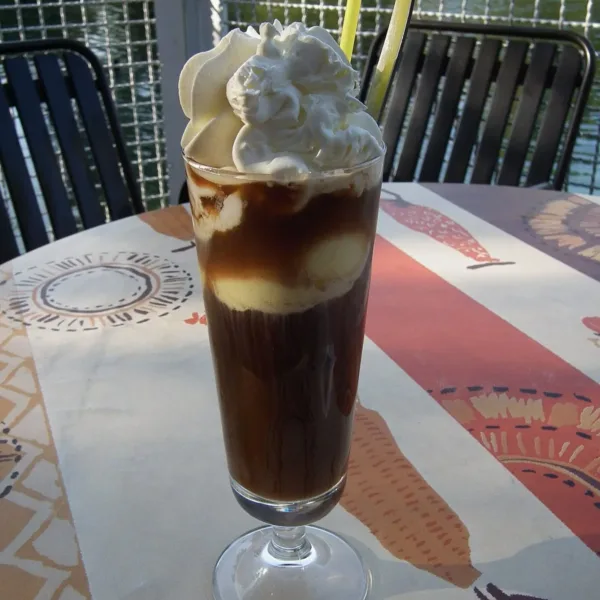
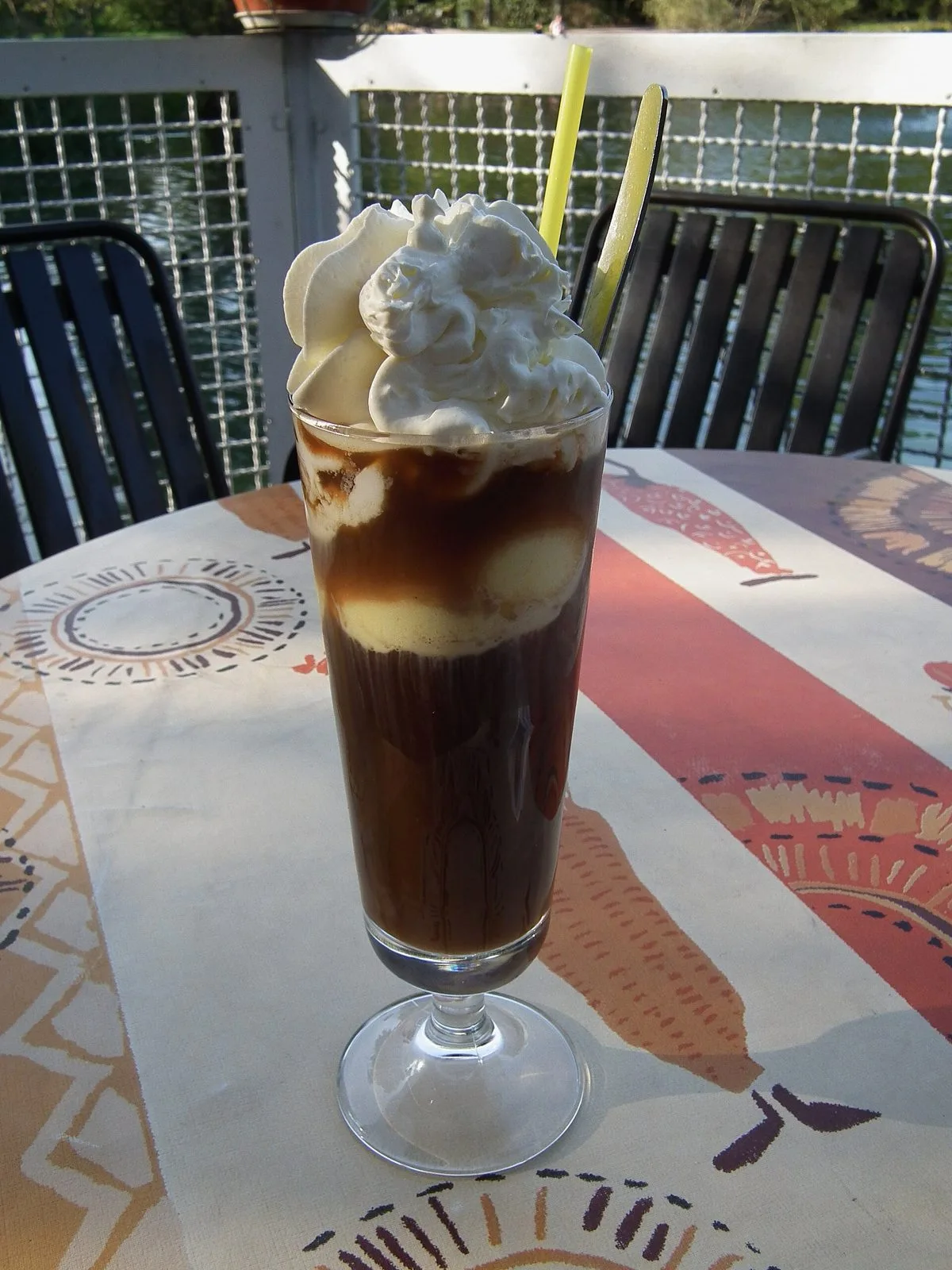
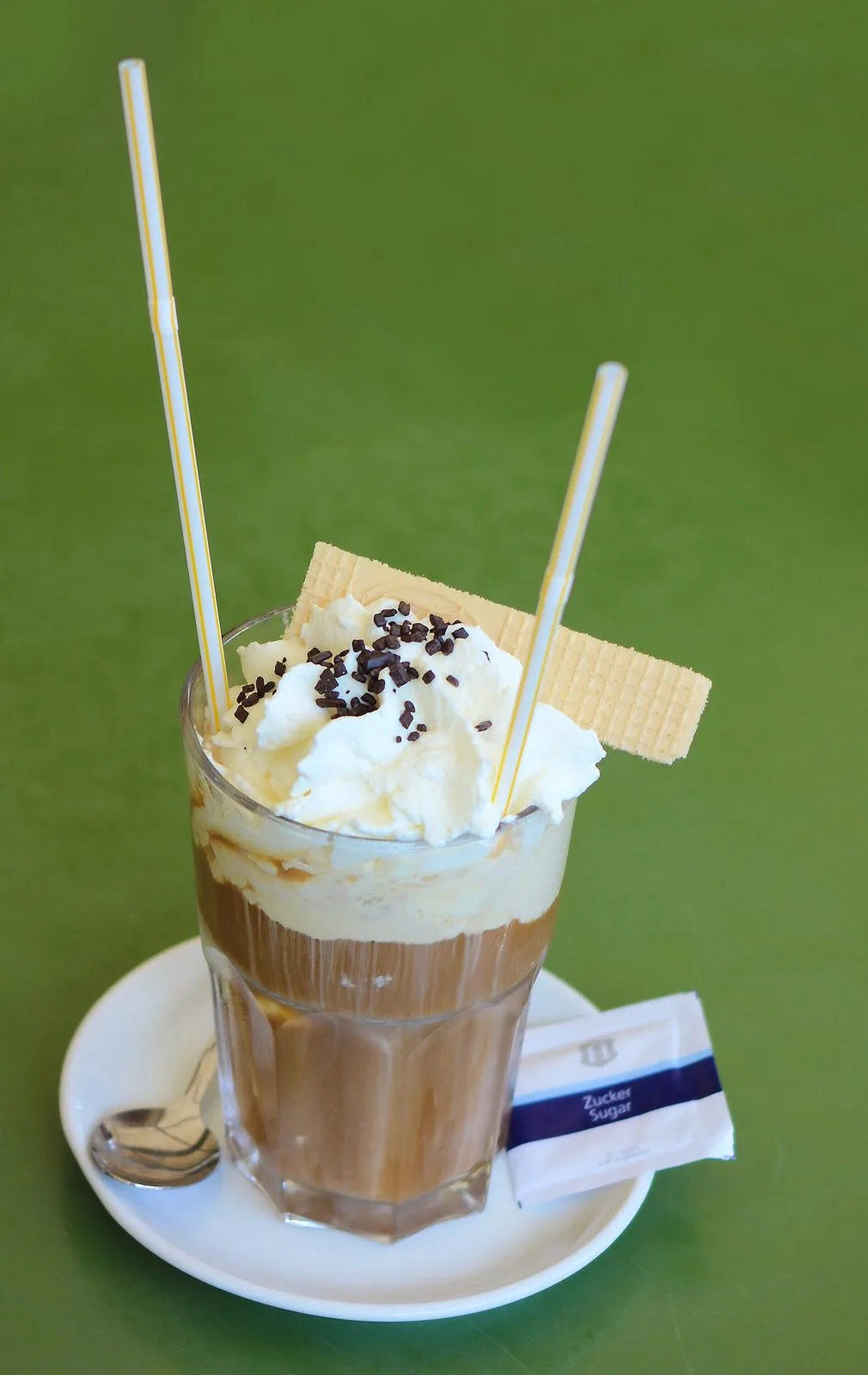
Cold filter coffee poured over vanilla ice cream in a tall glass, topped with whipped cream and chocolate shavings or cocoa, often with a wafer. A summer fixture of German ice-cream parlours (Eisdielen) and café terraces.
- ServedIced
- In EnglishIce-cream coffee
- TastesCreamy, Rich, Sweet
About Eiskaffee
Ask for an Eiskaffee in Germany and you won’t get coffee over ice cubes. You’ll get a dessert in a glass: chilled black coffee poured over one or two scoops of vanilla ice cream, topped with a mound of whipped cream and finished with chocolate shavings or cocoa, and often a crisp wafer. It comes with a straw for the coffee and a long spoon for everything else.
The pleasure is in how it changes as you drink it. At first the coffee is cold and bitter against the sweet cream; as the ice cream melts, the drink turns into something like a coffee milkshake. It is rich and sweet, closer to a sundae than to an iced latte.
Eiskaffee is a staple of the German Eisdiele (ice-cream parlour), where people sit outside under parasols on warm afternoons, and it is easy to make at home. Austria has a close cousin, the Wiener Eiskaffee, and ready-made versions are sold in cans in German supermarkets.
In the cup
- Whipped cream and chocolate 35%
- Vanilla ice cream 20%
- Chilled black coffee 45%
Ingredients
- Strong filter coffee, chilled≈ 150–200 ml
- Vanilla ice cream1–2 scoops
- Whipped cream≈ 3–4 heaped tbsp
- Chocolate shavings or cocoa powdera sprinkle
- Wafer (optional)1
- Sugar (optional)to taste
How to make it
You needCoffee maker, tall glass, ice-cream scoop, whisk or cream siphon, straw and long spoon
RatioRoughly 1 cup (≈ 150–200 ml) cold coffee to 1–2 scoops of ice cream, with about as much whipped cream again
-
Brew a strong cup of filter coffee, sweeten it if you like, and chill it in the fridge.
-
Put one or two scoops of vanilla ice cream into a tall glass.
-
Pour the cold coffee over the ice cream, leaving room at the top.
-
Top generously with whipped cream.
-
Finish with chocolate shavings or cocoa and a wafer; serve with a straw and a long spoon.
Origin & history
Cold coffee drinks have a long history in Europe, from the 19th-century mazagran to Italian coffee granita, but the origins of the German Eiskaffee itself are not well documented. What is clear is how it is defined in Germany today: cooled filter coffee with vanilla ice cream and whipped cream, rather than coffee over ice cubes.
It has long been a standard item on the menus of German ice-cream parlours and cafés, served on summer terraces across the country, and is a familiar home-made treat. Neighbouring Austria serves a very similar Wiener Eiskaffee in its coffee houses.
Variations
- Wiener Eiskaffeecoffee and milk with vanilla ice cream and whipped cream in a tall glass (Austria)
- Café heladocoffee with ice cream, sometimes flavoured with cinnamon or dulce de leche (Chile)
- Affogatoa scoop of ice cream “drowned” in hot espresso (Italy)
- Canned Eiskaffeeready-to-drink milky iced coffee from German supermarkets (Germany)
Good to know
Brew the coffee strong and chill it completely, or the ice cream will melt too fast.
Sweeten the coffee while it's still hot if you want it sweeter – sugar won't dissolve once it's cold.
Use the straw for the coffee and the long spoon for the ice cream and cream.
Swap the vanilla for chocolate or hazelnut ice cream for a richer version.