Cà Phê Đen Đá
Cà phê đen đá Say kah-feh den DAH
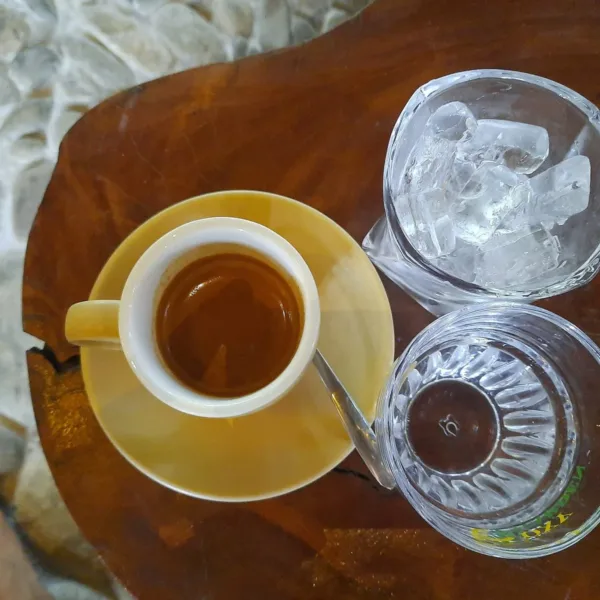
Strong phin-brewed Robusta, served black over ice, with or without sugar. No condensed milk – just a dark, intense, slightly chocolatey coffee that is the purist's choice in Vietnam.
- ServedHot & Iced
- In EnglishBlack iced coffee
- TastesBitter, Bold, Chocolatey
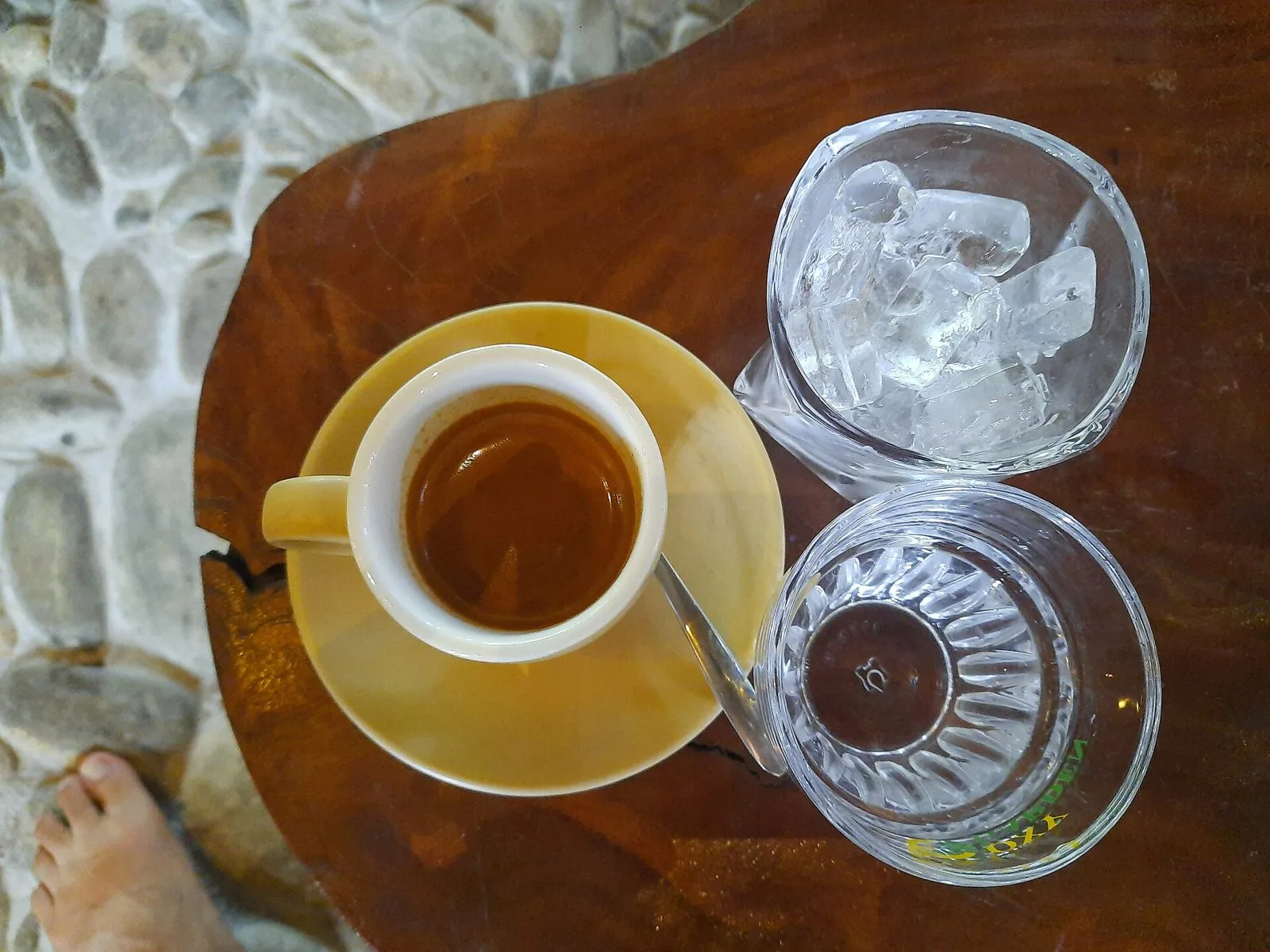
About Cà Phê Đen Đá
Cà phê đen đá is the simplest of Vietnam’s coffees: đen means black and đá means ice. Dark-roasted Robusta is brewed slowly through a phin, the small metal drip filter that sits on top of the glass, and the concentrated coffee is then stirred, often with a spoonful of sugar, and poured over ice.
Vietnam is one of the world’s biggest coffee producers, and almost all of it is Robusta. Roasted dark, it gives a cup that is intensely strong, bitter and full-bodied, with notes of dark chocolate and roasted nuts. Robusta has nearly twice the caffeine of Arabica, so a glass packs a real punch.
It is the black twin of cà phê sữa đá, the iced coffee with condensed milk. Many visitors find the black version too bitter, but it is a favourite of locals who drink it on low plastic stools at street cafés, often with a glass of iced tea on the side. A hot version, cà phê đen nóng, is also common.
In the cup
- Phin-brewed black coffee 60%
- Ice 40%
Ingredients
- Dark-roast Vietnamese Robusta, ground medium-fine2–3 heaped tbsp (≈ 20–25 g)
- Hot water (≈ 90–95 °C)≈ 60–80 ml
- Sugar (optional)1–2 tsp
- Iceto fill the glass
How to make it
You needPhin filter, small glass or cup to brew into, tall glass, long spoon
Ratio≈ 20–25 g coffee to 60–80 ml water through the phin, then over a glass of ice
-
Put the coffee into the phin, shake it level and set the press on top.
-
Pour in a splash of hot water to bloom the grounds for about 30 seconds.
-
Fill the phin with hot water, put the lid on and let it drip slowly – about 4–5 minutes.
-
Stir in sugar while the coffee is hot, if using.
-
Pour over a glass full of ice and stir.
Origin & history
Coffee was brought to Vietnam by the French during the colonial period of the 19th century. The Vietnamese way of drinking it – brewed in an individual phin filter and served over ice – grew out of that French café tradition, adapted to a tropical climate and to the dark-roasted Robusta that suited local growing conditions.
Robusta became the backbone of the industry, especially in the Central Highlands, and Vietnam grew into one of the world’s largest coffee producers. Black coffee over ice, with or without sugar, became an everyday staple alongside its condensed-milk sibling, cà phê sữa đá.
Exactly when serving coffee over ice became common in Vietnam is not well documented, but the street-café culture of low stools and phin-dripped glasses is now one of the most familiar sights in the country.
Variations
- Cà phê đen nóngthe same coffee served hot (Vietnam)
- Cà phê sữa đá / cà phê nâu đáwith sweetened condensed milk; nâu is the northern name (Vietnam)
- Cà phê muốitopped with salted cream (Huế)
- Arabica black coffeelighter, fruitier black coffee made with Đà Lạt Arabica at modern cafés (Vietnam)
Good to know
It is often served with the phin still dripping on top of the glass – wait until it finishes, then stir and pour over the ice.
Sugar is usually added by default; say “không đường” if you want it unsweetened.
If it's too strong, let the ice melt for a minute or order cà phê sữa đá (with condensed milk) instead.
Expect a free glass of iced tea (trà đá) at many local cafés – it's for sipping between mouthfuls.