Siphon Coffee
Siphon / syphon (Japanese: サイフォン, saifon) Say SY-fun (Japanese: sai-FON)
Coffee brewed in two stacked glass chambers over a flame or heater. Water rises into the top chamber, steeps with the coffee, and is drawn back down through a filter when the heat is removed – giving a clear, fragrant, full-flavoured cup.
- ServedHot
- In EnglishVacuum coffee / vac pot coffee
- TastesBalanced, Bright, Smooth
About Siphon Coffee
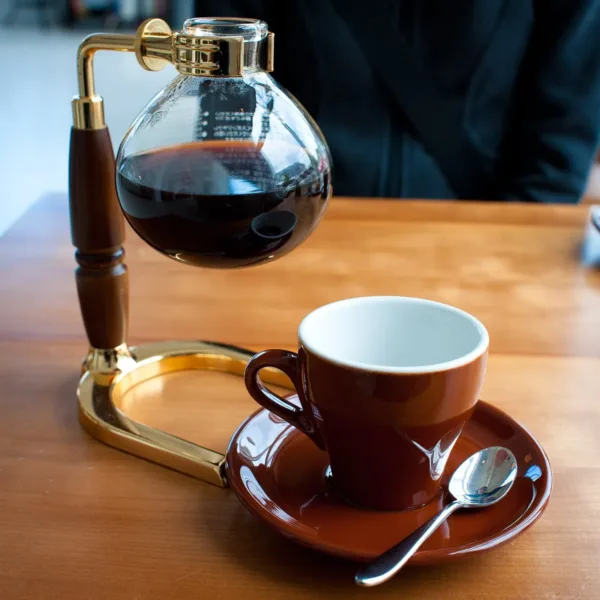
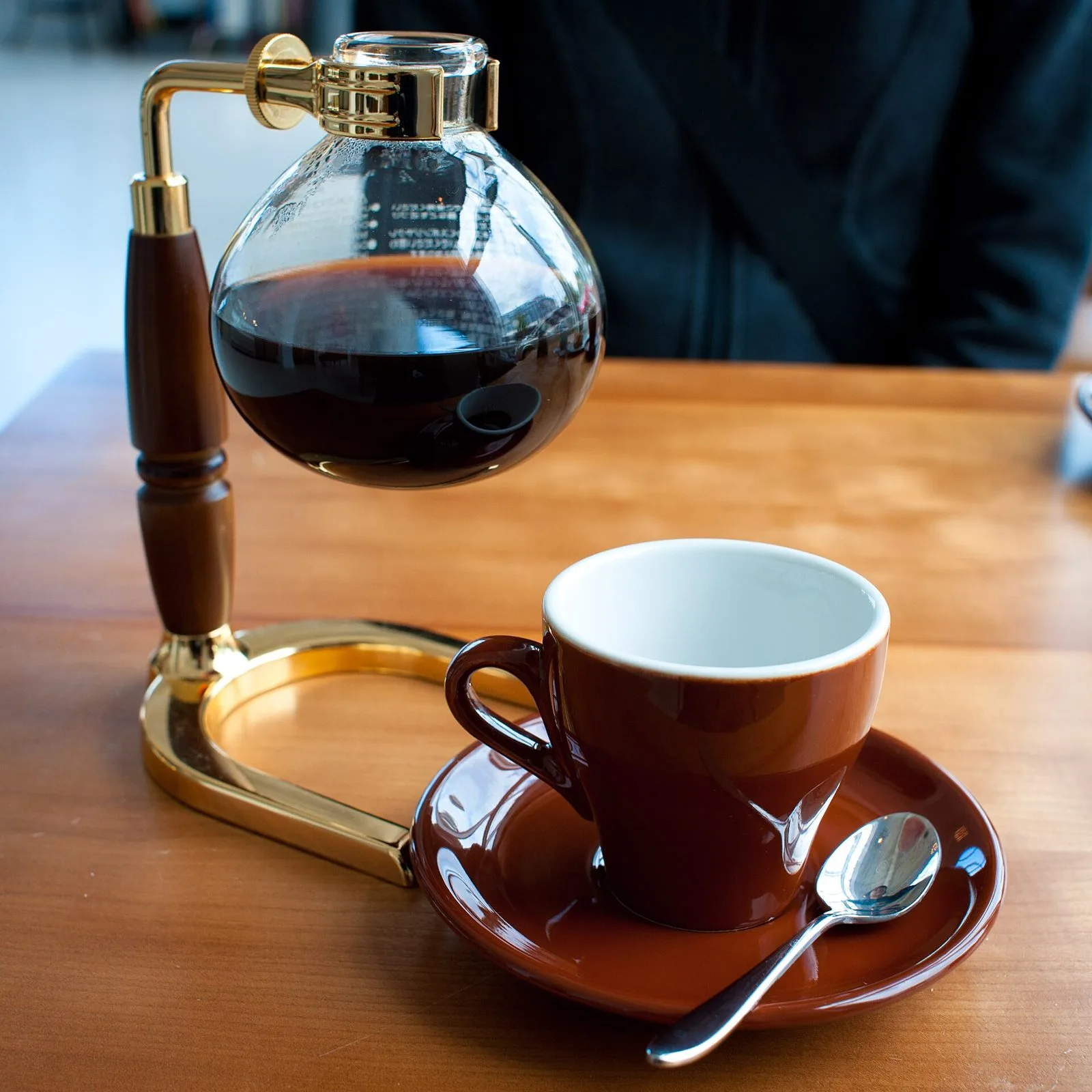
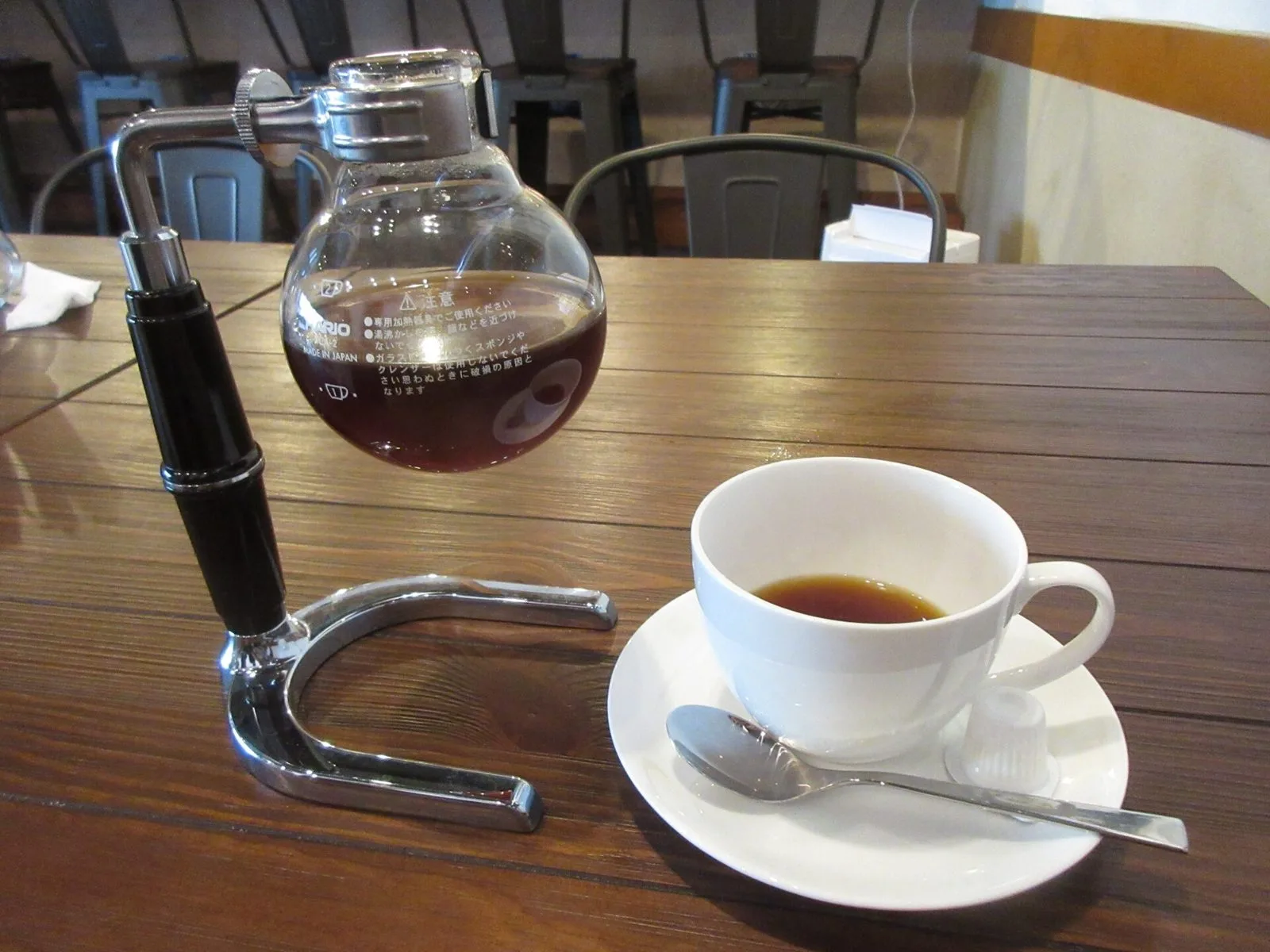
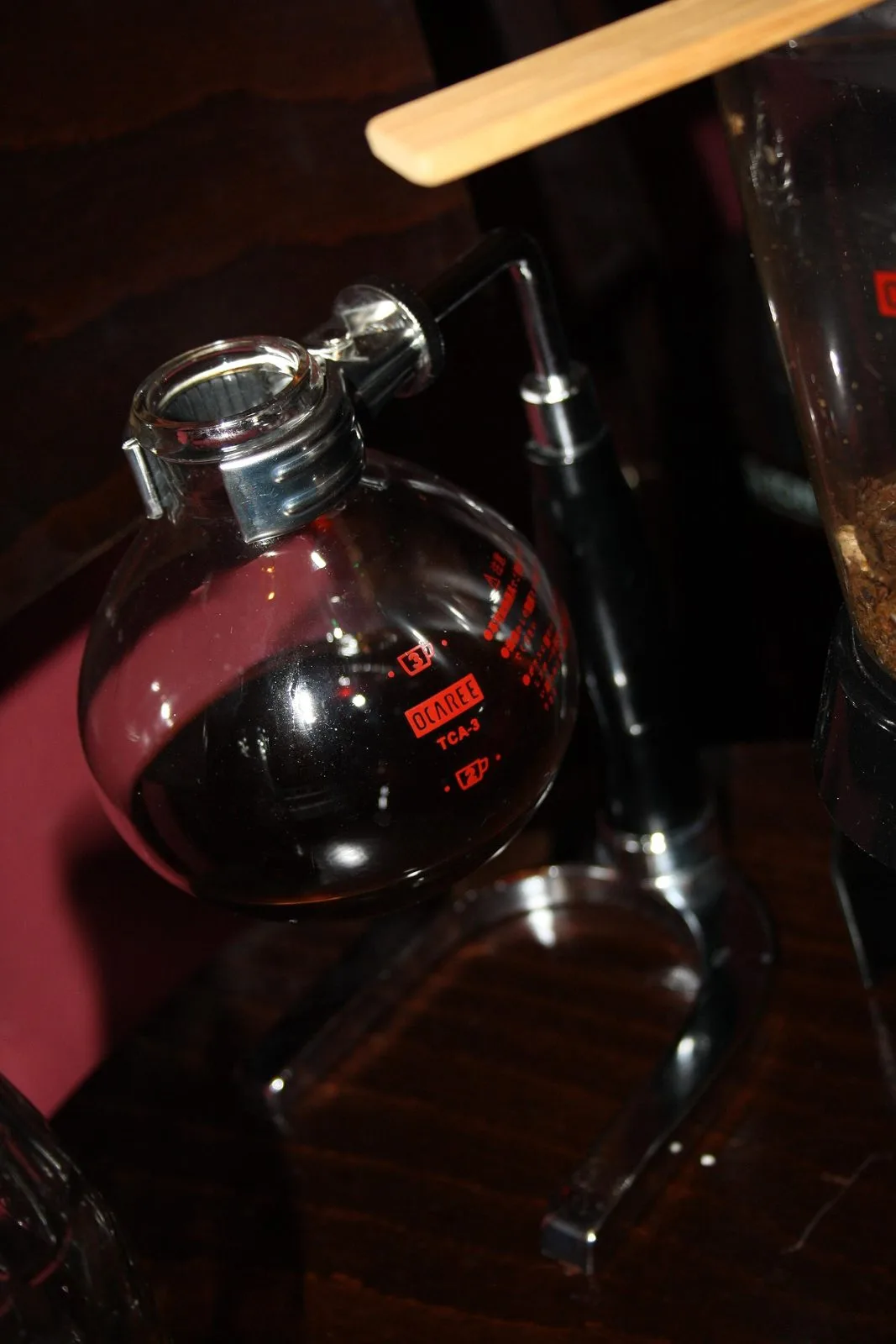
A siphon (also spelt syphon, or called a vacuum pot) looks more like laboratory glassware than a coffee maker. Water is heated in a round lower globe; as it gets hot, vapour pressure pushes it up a tube into the upper chamber, where it meets the ground coffee and steeps just below boiling. When the heat is turned off, the lower chamber cools, the pressure drops and the brewed coffee is pulled back down through a cloth, paper or metal filter, leaving the grounds behind.
The result combines the body of an immersion brew with the clarity of a filtered one: clean, aromatic and often described as tea-like, with flavours that open up as it cools. It is a slower, more hands-on method that needs attention, which is part of its appeal.
Vacuum brewers were popular in Europe and the United States into the mid-20th century before electric drip machines took over. Today they are most closely associated with Japan and Taiwan, where siphon coffee is a speciality at traditional coffee houses and at competitions.
In the cup
- Siphon-brewed coffee 100%
Ingredients
- Ground coffee (medium-fine)≈ 20–24 g for 2 cups
- Filtered water≈ 300–360 ml
- Cloth or paper filter1
How to make it
You needSiphon (vacuum brewer) with lower globe, upper chamber and filter; spirit lamp, butane burner or halogen heater; bamboo paddle or spoon
RatioAbout 1:15 – e.g. ≈ 34 g coffee to ≈ 510 ml water
-
Fit the filter into the upper chamber, hooking its chain onto the bottom of the tube.
-
Fill the lower globe with hot water and start heating it.
-
Seat the upper chamber loosely; once the water is close to boiling, set it firmly in place – the water will rise.
-
Add the coffee to the risen water and stir gently until it is all wet.
-
Let it steep for about 1–1.5 minutes, then remove the heat.
-
Give one gentle stir; the coffee will be drawn down into the lower globe in under a minute.
-
Remove the upper chamber and pour from the lower globe.
Origin & history
The vacuum coffee maker is usually traced to Loeff of Berlin in the 1830s. In 1841 Madame Vassieux of Lyon patented the twin-globe design that most people still picture today, and other variants soon followed – among them the Napier vacuum machine and the side-by-side “balance” siphon, whose counterweight extinguishes the flame when the water has risen.
Vacuum brewers reached the United States towards the end of the 19th century. From 1915 the Silex, made with oven-proof Pyrex glass, brought them into many American kitchens, and they stayed popular until the mid-20th century, when simpler electric drip machines replaced them in most homes.
In Japan the siphon found a lasting home. The glassmaker Hario developed an all-glass siphon after the Second World War, and siphon coffee became a hallmark of Japanese coffee houses. Japan launched a Japan Siphonist Championship in 2003, which grew into the World Siphonist Championship in 2009.
Variations
- Balance siphona side-by-side version where a counterweight puts out the flame automatically, also called a Belgian brewer (Europe)
- Halogen-beam siphonheated by a halogen lamp, popular in Japanese and Taiwanese cafés
- Sintraxa 1920s Bauhaus-designed vacuum brewer by Gerhard Marcks (Germany)
- Automated siphonmodern electric machines that run the rise-and-fall cycle for you (Japan)
Good to know
Sit at the counter if you can – watching the coffee rise and fall is half the fun.
Expect to wait a few minutes; each cup is brewed to order.
At home, keep cloth filters wet in the fridge between uses – a dried-out cloth holds stale oils.
Stir gently once the water has risen so all the grounds are wet, then leave it alone.
Let it cool for a minute before drinking; the flavours become clearer as it cools.