Kopi Joss
Kopi joss (also kopi jos) Say KOH-pee JOSS
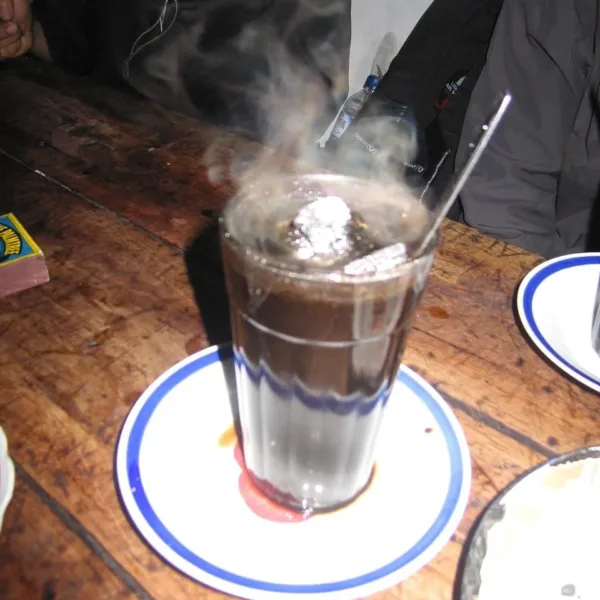
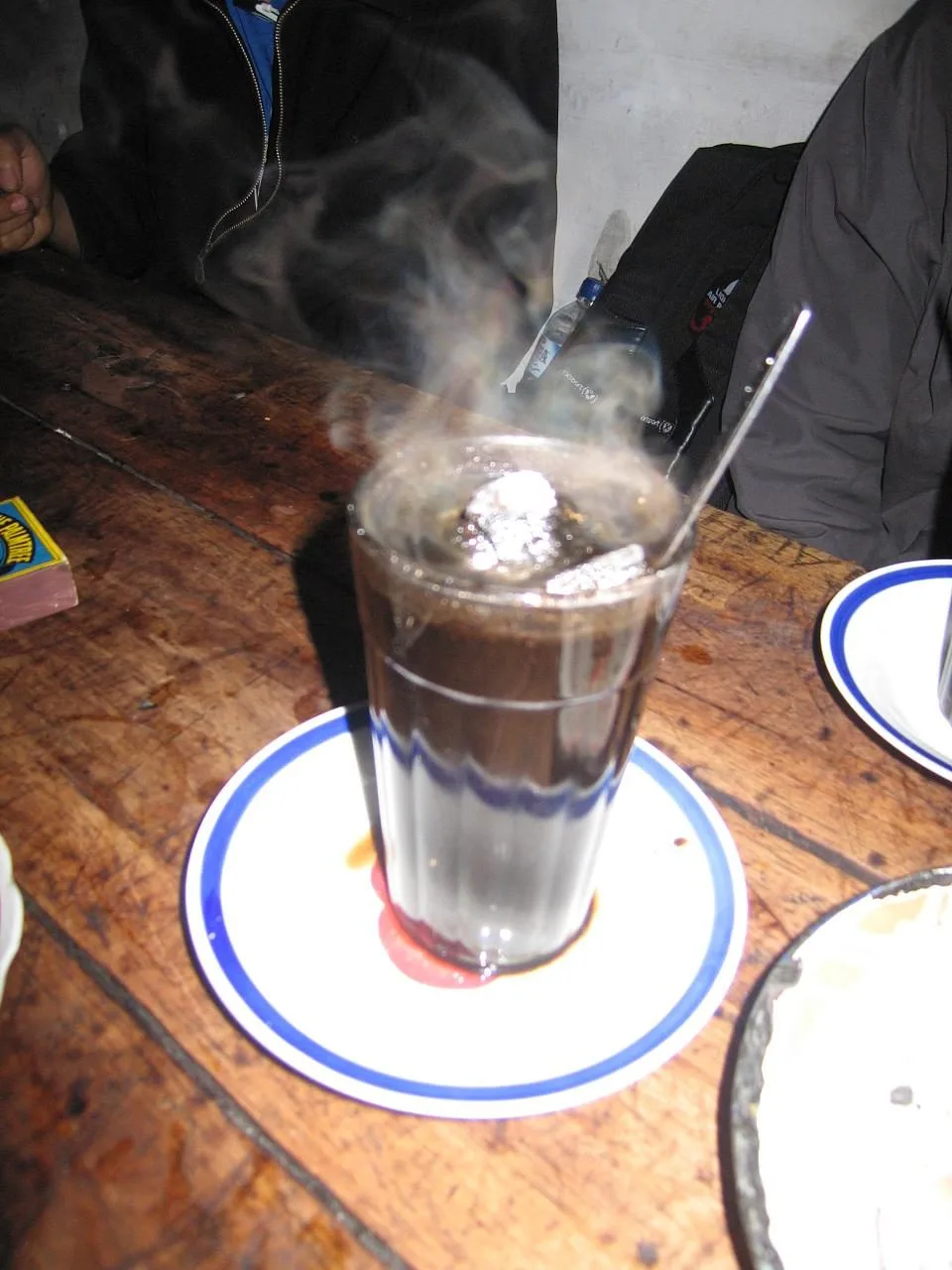
Sweetened black Javanese coffee, made with grounds left in the glass, into which a glowing piece of charcoal is dropped. The coal hisses and bubbles – the “joss” sound – and is then removed before drinking.
- ServedHot
- In EnglishCharcoal coffee
- TastesBitter, Bold, Sweet
About Kopi Joss
Kopi joss is a speciality of Yogyakarta (Jogja) in Central Java. It starts as simple Indonesian street coffee: ground coffee and sugar in a glass, with hot water poured over, grounds and all. Then the vendor picks a glowing ember from the stall’s charcoal stove and drops it straight into the glass, where it hisses, sizzles and bubbles. That sound gives the drink its name.
Once the coal has cooled it’s fished out (or pushed aside), and the grounds settle to the bottom. Some drinkers say it tastes much like ordinary sweet black coffee; others notice a faint smoky, burnt-sugar or caramel note. Vendors often claim the charcoal makes the coffee gentler on the stomach, but this is not medically supported.
Kopi joss is sold at angkringan – the cheap street-food carts and stalls of Yogyakarta, where people sit on mats late into the night. The best-known place is the angkringan of Lik Man (also spelled Lek Man) near Tugu railway station.
In the cup
- Sweet black coffee 90%
- Charcoal ember and settled grounds 10%
Ingredients
- Finely ground Javanese coffee1–2 heaped tsp
- Sugar1–2 tsp
- Boiling water≈ 200 ml
- Red-hot piece of food-safe wood charcoal1 small lump
How to make it
You needHeatproof glass, charcoal stove, metal tongs, spoon
RatioAbout 1–2 heaped tsp ground coffee and 1–2 tsp sugar per 200 ml water
-
Put the ground coffee and sugar in a heatproof glass.
-
Pour in boiling water and stir.
-
With tongs, take a glowing piece of charcoal from the stove and carefully drop it into the glass – it will hiss and bubble.
-
Wait until the bubbling stops and the grounds settle.
-
Remove the charcoal (or leave it at the bottom) and sip carefully, leaving the grounds behind.
Origin & history
Kopi joss is usually traced to the angkringan of a stall owner known as Lik Man (or Lek Man) near Tugu Station in Yogyakarta, and popular accounts date it to the 1960s. One version, given on Wikipedia, says many of his customers were railway workers from East Java who asked for kopi kothok – coffee boiled with sugar and water – and Lik Man, unable to make it, dropped a burning piece of charcoal into the glass instead. Other accounts say it was a quick way to reheat coffee, or a remedy for a stomach ache.
These details come from local tradition rather than documents, so the date and the exact story should be treated with caution. What is certain is that the drink caught on: other angkringan copied it, and it is now one of Yogyakarta’s best-known street specialities and a must-try for visitors.
Variations
- Kopi tubrukthe plain version: unfiltered coffee and sugar with hot water, no charcoal (Indonesia)
- Kopi kothokcoffee, sugar and water boiled together, the drink kopi joss is said to have replaced (Java, Indonesia)
- Kopi luwakoften confused with it but unrelated: coffee made from beans that have passed through a civet (Indonesia)
Good to know
Go in the evening – the angkringan near Tugu Station get lively after dark.
Let the charcoal stop bubbling and the grounds settle before you drink, and don't swallow the coal or the sludge at the bottom.
It usually comes very sweet; ask for less sugar if you prefer.
Claims that the charcoal neutralises acidity or caffeine are folklore, not science – enjoy it for the experience.