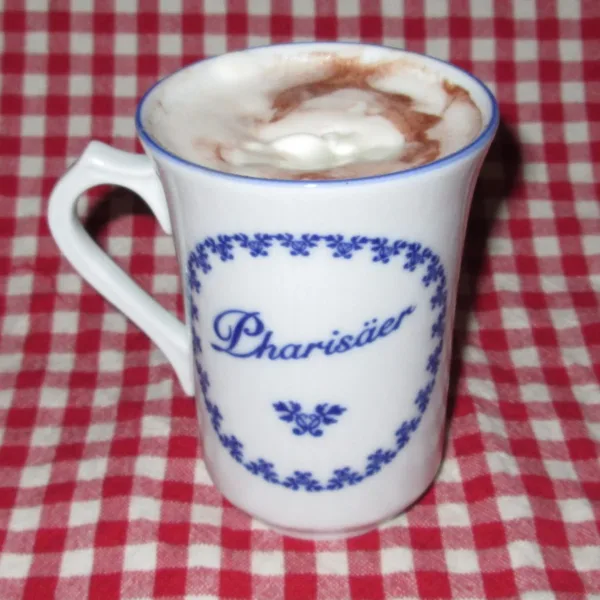
Pharisäer
Say fa-ree-ZAY-er
Strong hot coffee, a sugar cube and at least 4 cl of brown rum in a tall cup, topped with whipped cream and drunk without stirring. The signature drink of Nordstrand and the North Sea coast of Schleswig-Holstein.
- ServedHot
- In EnglishPharisee (coffee)
- TastesCreamy, Rich, Sweet
About Pharisäer
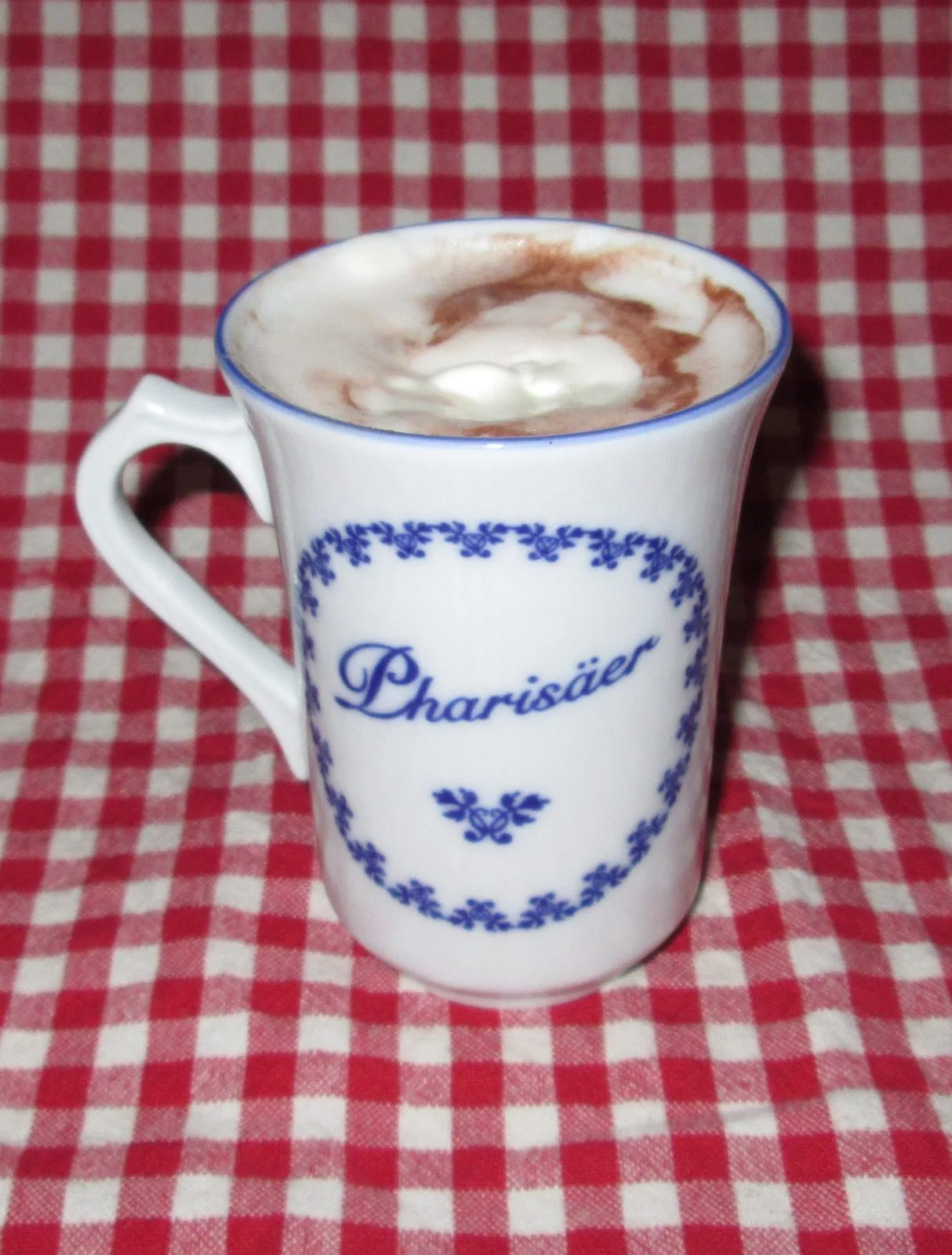
The Pharisäer is a hot coffee drink from North Frisia, on Germany’s North Sea coast in Schleswig-Holstein. A strong black coffee is sweetened with sugar, laced with brown rum and topped with a thick cap of whipped cream. It is especially associated with Nordstrand, a former island now joined to the mainland by a causeway, but you’ll find it in cafés and restaurants all along the coast.
The cream is not just decoration. According to the drink’s legend, it was there to hide the smell of the rum, and it is still part of the ritual: you don’t stir, you don’t use a spoon or straw, you sip the hot, sweet, boozy coffee through the cold cream. Local custom says that if you stir, you buy the next round.
It tastes warming and rich, with molasses and spice from the rum and a sweet, creamy finish – a classic after a windy walk on the dykes. Its name refers to the biblical Pharisees, long used in German as a byword for hypocrites; some writers point out that this usage draws on old anti-Jewish stereotypes.
In the cup
- Whipped cream 25%
- Sweetened coffee with rum 75%
Ingredients
- Hot, strong brewed coffee≈ 125–150 ml
- Brown (dark) rumat least 4 cl
- Sugar (or 1 sugar cube)1–2 tsp
- Whipping cream, whipped (usually unsweetened)≈ 2–3 heaped tbsp
How to make it
You needPour-over or filter coffee maker, tall cup or mug, whisk or cream siphon
Ratio≈ 150 ml strong coffee to at least 4 cl rum, with a thick cap of cream
-
Brew a strong pot of filter coffee.
-
Warm the cups with hot water and pour it away.
-
Put the sugar into each cup and add the rum (some people warm the rum slightly first).
-
Pour in the hot coffee and stir until the sugar has dissolved.
-
Top with a thick layer of whipped cream and serve straight away – from now on, no stirring.
Origin & history
The Pharisäer’s origin is a local legend rather than documented history. The story usually told on Nordstrand sets it at a christening in the 19th century – some versions give 1872 and name the host as a farmer, Peter Georg Johannsen. The pastor, a teetotaller sometimes named as Bleyer, disapproved of alcohol, so the hosts secretly spiked the guests’ coffee with rum and covered it with whipped cream to hide the smell, while the pastor got plain coffee. When the guests grew merrier and he was handed the wrong cup, he is said to have exclaimed “Oh, ihr Pharisäer!” (“Oh, you Pharisees!” – you hypocrites), and the name stuck.
Whatever its true beginnings, the drink became the unofficial national drink of Nordstrand and a fixture of cafés along Schleswig-Holstein’s west coast, part of a Frisian tradition of rum-laced hot drinks that also includes the Tote Tante. It even reached a courtroom: in 1981 a Flensburg court dealt with a customer who refused to pay for a Pharisäer, and the case is often summarised as ruling that one with less than about 4 cl of rum isn’t the real thing.
Variations
- Tote Tantehot chocolate with rum under whipped cream (North Frisia, Germany)
- Rüdesheimer Kaffeecoffee with Asbach brandy, sugar and whipped cream (Rhineland, Germany)
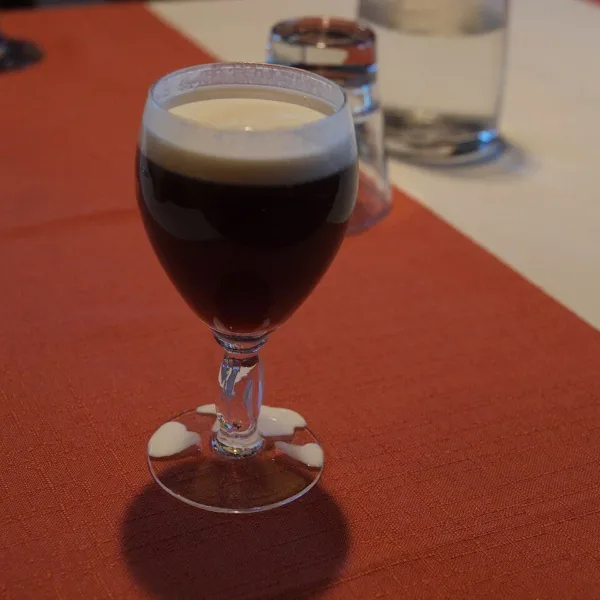
- Irish coffeecoffee with Irish whiskey under floating cream (Ireland)
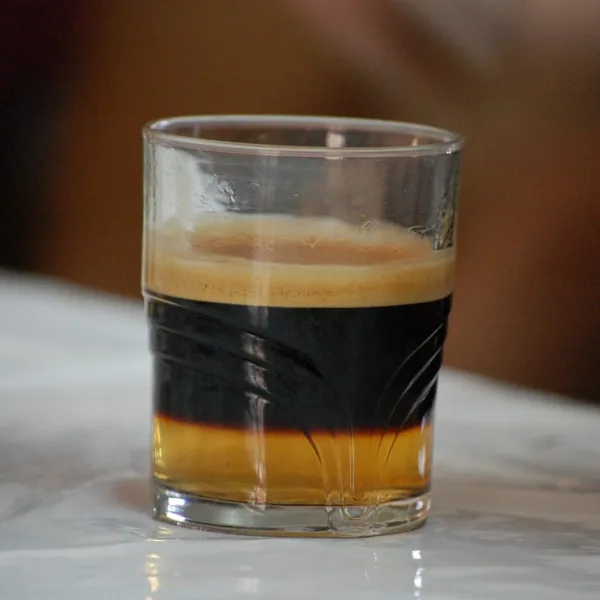
- Fiakercoffee with rum or cherry schnapps in a glass (Austria)
Good to know
Don't stir it and don't use a spoon or straw – local custom says the stirrer buys the next round.
Dissolve the sugar in the rum or coffee before the cream goes on.
Use a brown or dark rum, not a premium aged one – its sweetness is part of the flavour.
It contains a full measure of spirits, so drink responsibly and don't drive.