Nitro Cold Brew
Nitro cold brew Say NY-troh KOHLD broo
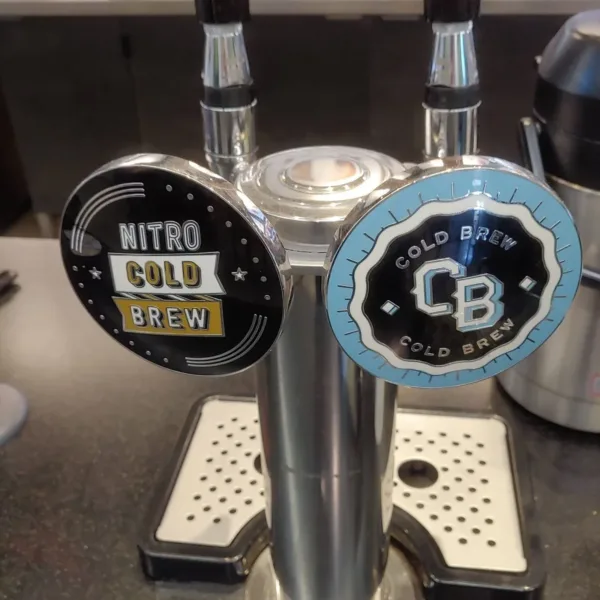
Cold brew coffee charged with nitrogen and dispensed from a tap like a stout. Tiny nitrogen bubbles give it a velvety body, a cascading pour and a creamy head – without milk or sugar.
- ServedIced
- In EnglishNitrogen-infused cold brew coffee
- TastesBold, Creamy, Smooth
About Nitro Cold Brew
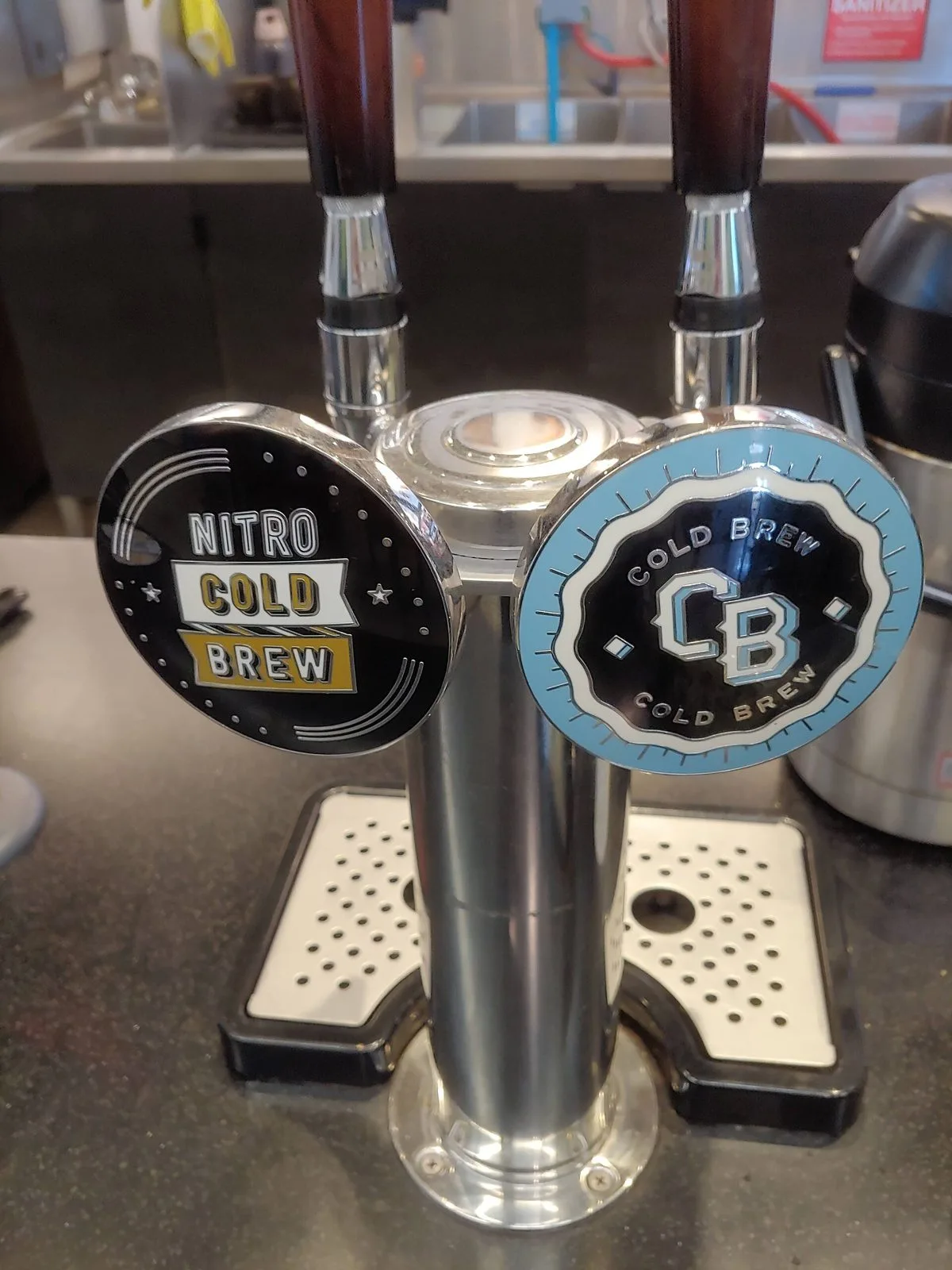
Nitro cold brew starts as ordinary cold brew: coarsely ground coffee steeped in cool water for 12–24 hours and filtered. It is then kegged and infused with nitrogen (often a nitrogen–CO₂ mix) and poured through a tap with a special faucet, just like a stout beer.
Because nitrogen barely dissolves in liquid, it forms tiny bubbles that tumble down the glass in a cascade and settle into a dense, creamy head. The result feels silky and full in the mouth and tends to taste sweeter and smoother than iced coffee, even though it usually contains no milk or sugar. It is served chilled but without ice, which would knock out the foam.
Since the mid-2010s nitro has spread from independent coffee bars in the USA to big chains, supermarkets (in cans with a nitrogen widget) and cafés worldwide.
In the cup
- Creamy nitro head 20%
- Nitrogen-infused cold brew 80%
Ingredients
- Coarsely ground coffee≈ 100 g
- Cold or room-temperature filtered water≈ 1 litre
- Nitrogen (from a keg system or cream whipper with N₂O/N₂ chargers)as needed
How to make it
You needLarge jar or cold-brew maker, filter, keg with nitrogen tap (or a nitro cold brew maker / cream whipper at home), glass
RatioVaries by café; ready-to-drink cold brew is commonly around 1:8–1:12 coffee to water (estimate)
-
Mix the coarsely ground coffee with the water and stir so all the grounds are wet.
-
Cover and leave to steep for 12–24 hours at room temperature or in the fridge.
-
Strain through a paper filter or fine cloth to get a clean cold brew.
-
Chill it, then charge it with nitrogen in a keg or a home nitro dispenser.
-
Pour hard into a glass without ice and let the cascade settle before drinking.
Origin & history
Cold-brewed coffee itself is old – slow cold drip has long been made in Japan, where it is known as Kyoto-style coffee. Serving it from a nitrogen tap is a 2010s American idea, and who did it first is disputed. Austin, Texas roaster Cuvée Coffee says it was serving tapped cold brew at events by the summer of 2012; its founder said he was inspired by the cascading pour of a nitro milk stout. Stumptown Coffee in Portland, Oregon, is also often credited, and a New York café, Queens Kickshaw, served coffee on draught in 2011.
Canned versions followed: Cuvée completed a canning line in 2014, and by 2015 both Cuvée and Stumptown were selling cans with a nitrogen-filled widget. The drink went mainstream when Starbucks introduced nitro cold brew to about 500 stores in the summer of 2016 (The Coffee Bean & Tea Leaf had already offered it in Los Angeles).
Variations
- Nitro with sweet creamnitro cold brew topped with vanilla sweet cream (USA)
- Canned nitro cold brewsold in cans with a nitrogen widget that foams on opening (USA / worldwide)
- Cold brewthe same coffee served still, over ice (worldwide)
- Kyoto-style cold dripslow-dripped cold coffee, the traditional Japanese method (Japan)
Good to know
Drink it without a straw at first to enjoy the creamy head.
Watch the pour: the cascading bubbles settle in about a minute, like a stout.
Skip the ice – it flattens the foam.
It's stronger than it tastes; a large serving can contain more caffeine than two espressos.