Kopi (Nanyang Coffee)
Kopi (咖啡) Say KOH-pee
Thick, dark coffee from Robusta beans wok-roasted with sugar and margarine, brewed in a cloth filter and mixed with sweetened condensed milk. A daily ritual in Singapore and Malaysia, ordered with its own Hokkien–Malay vocabulary.
- ServedHot & Iced
- In EnglishNanyang coffee / kopitiam coffee
- TastesBold, Rich, Sweet
About Kopi (Nanyang Coffee)
Kopi – the Malay word for coffee – is the everyday drink of the kopitiam, the traditional coffee shops of Singapore and Malaysia. Its distinctive flavour starts with the roast: Robusta beans are roasted very dark with sugar and margarine (and sometimes a little salt), which caramelises onto the beans and gives the coffee a deep, toasty, slightly buttery taste.
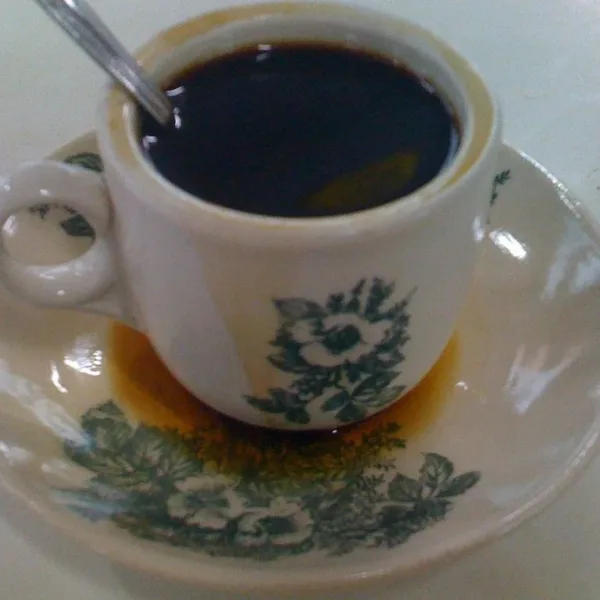
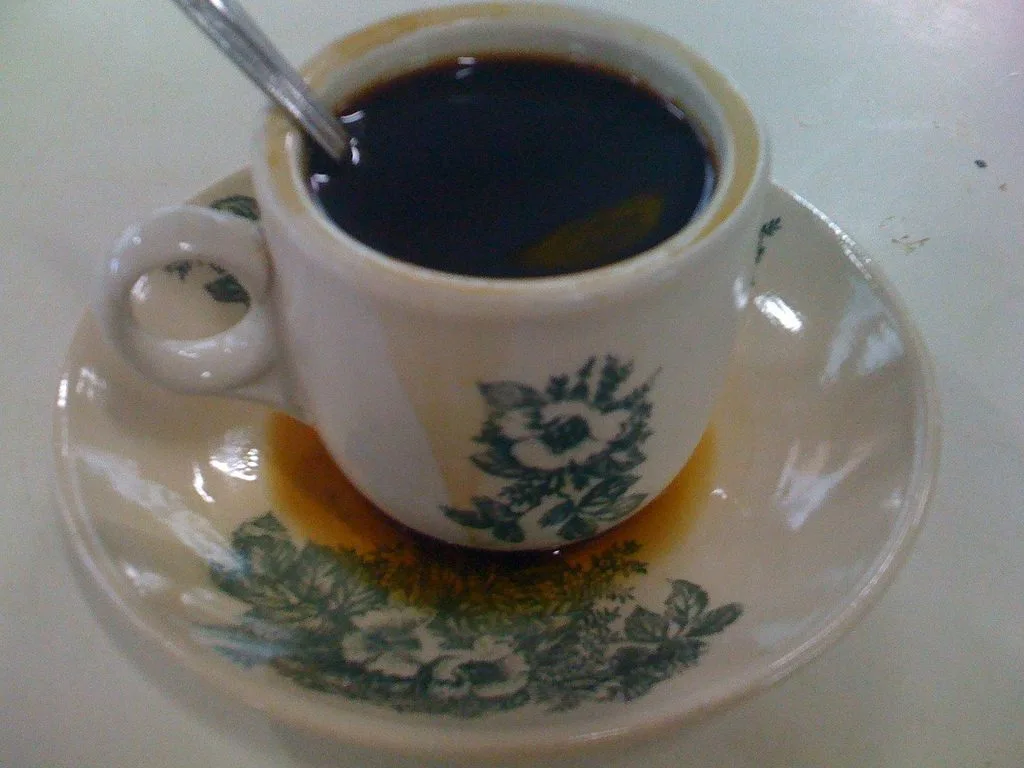
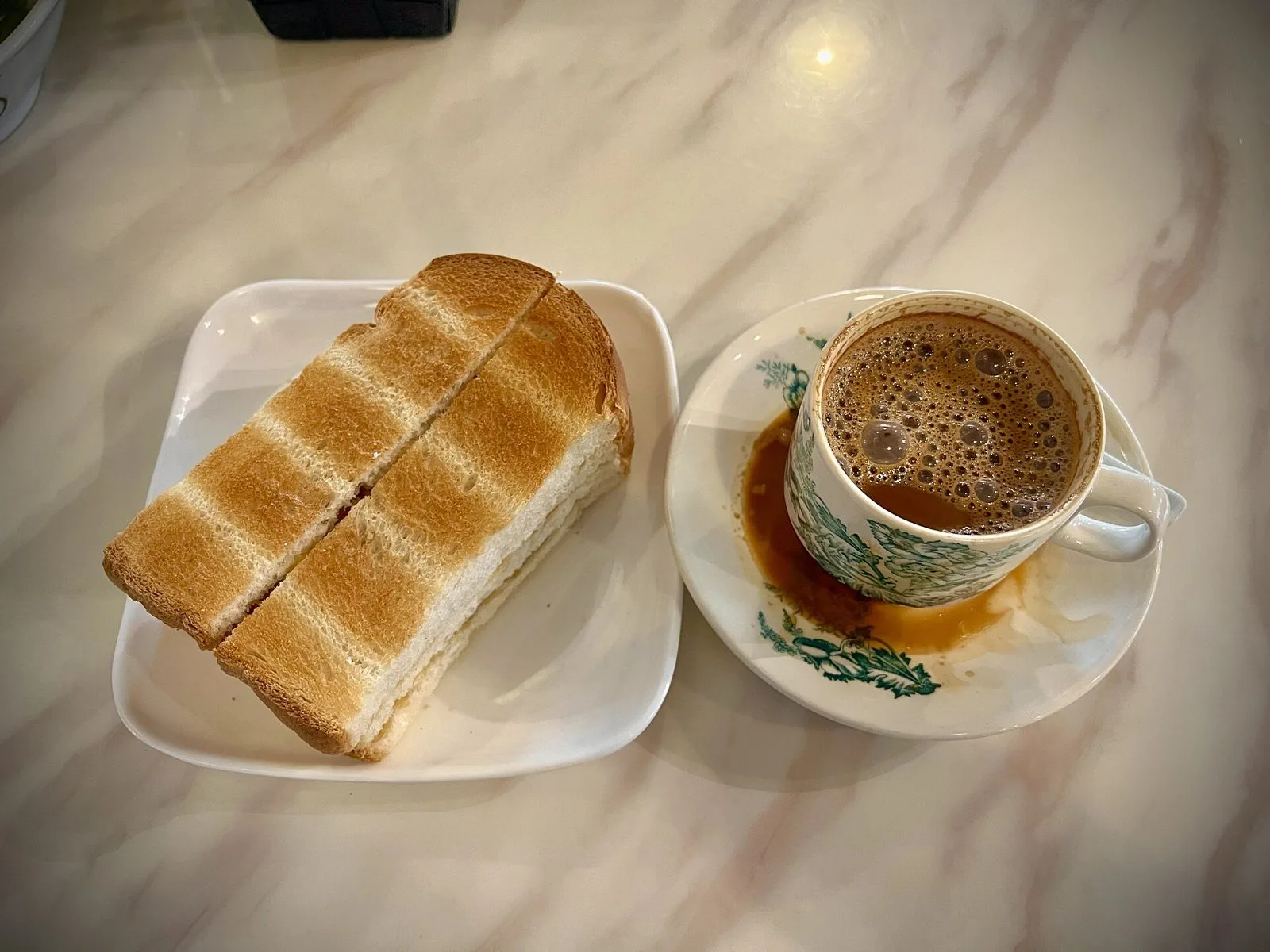
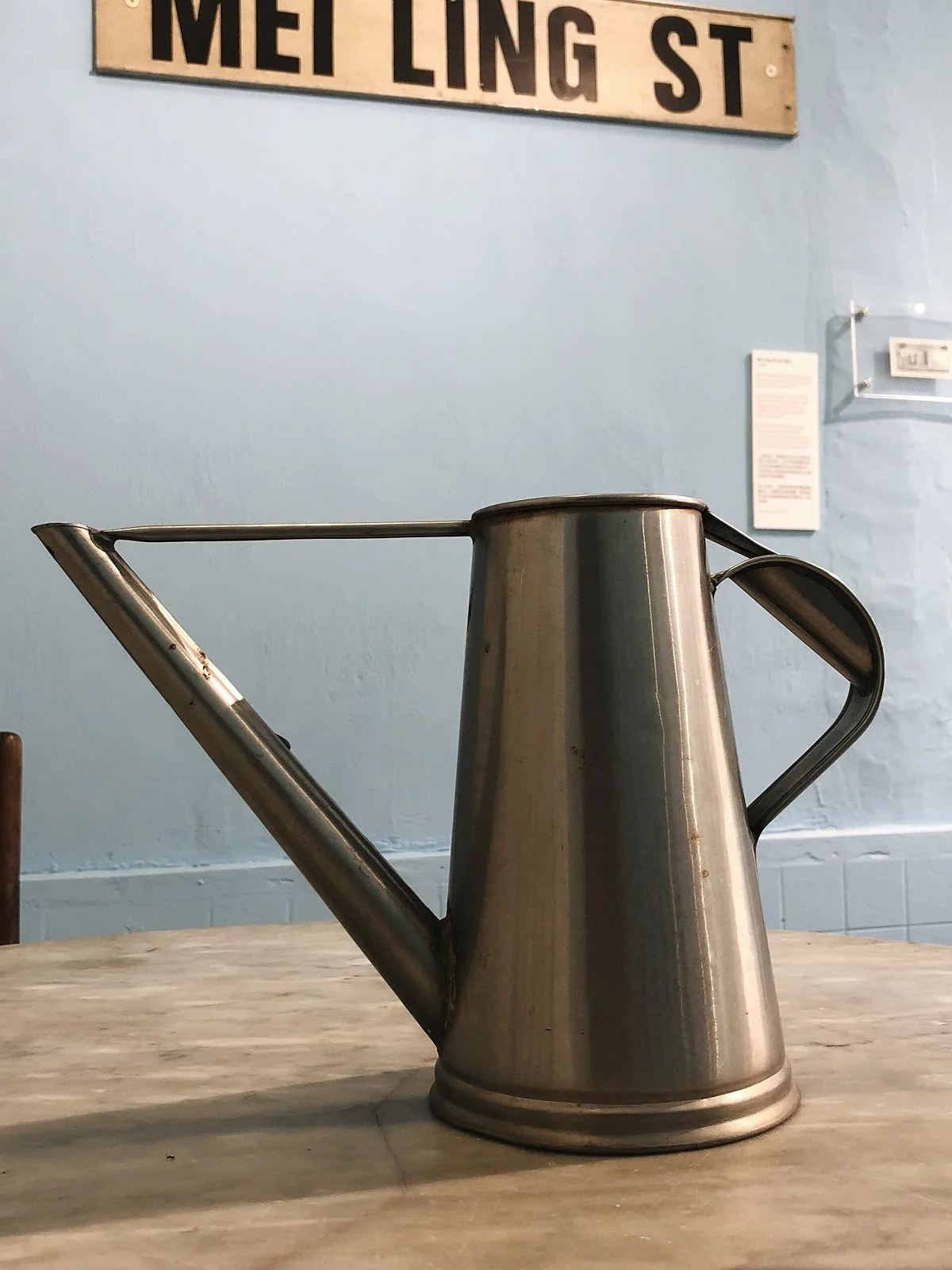
The ground coffee is placed in a long cloth filter, often called a “sock”, and hot water is poured through it into a tall pot. The coffee is stirred and poured back and forth to aerate it, then served in a thick china cup. By default “kopi” means coffee with sugar and sweetened condensed milk – strong, sweet and rich.
Every other version has its own code. Kopi-O is black with sugar, kopi-C comes with evaporated milk, peng means iced, kosong means no sugar, siew dai less sweet and gao extra strong. Singaporeans count dozens of combinations, and kopi makes up the large majority of coffee drunk in the city-state.
In the cup
- Froth 5%
- Sock-brewed kopi 75%
- Sweetened condensed milk 20%
Ingredients
- Kopi powder (Robusta roasted with sugar and margarine)2–3 tbsp
- Boiling water≈ 200 ml
- Sweetened condensed milk1–2 tbsp
- Sugar (optional)to taste
How to make it
You needCloth coffee “sock” filter, tall kettle or brewing pot, second pot for pouring, thick china cup
RatioVaries by stall; roughly 2–3 tbsp ground coffee per cup, brewed strong and mixed with ≈ 1–2 tbsp condensed milk
-
Put the kopi powder into the cloth sock and set it in the brewing pot.
-
Pour in boiling water and stir the grounds in the sock.
-
Leave to steep for a few minutes, then lift out the sock.
-
Pour the coffee between two pots a few times to aerate and cool it slightly.
-
Add condensed milk (and sugar if liked) to the cup, pour in the coffee and stir.
Origin & history
Kopi developed during the British colonial period in Malaya and Singapore. Robusta beans, which grew better in the region than Arabica, became the standard, and Chinese immigrants adapted coffee to local tastes with their dark sugar-and-margarine roast. The vocabulary of ordering is largely Hokkien, reflecting the many Hokkien-speaking immigrants from Fujian, while “Nanyang” – the Chinese name for Southeast Asia – gives the coffee its other name.
Hainanese immigrants played a central role. Arriving in large numbers from the 1870s, many worked as cooks and in service jobs, and from the 1920s to the 1950s they opened coffee shops of their own. Well-known names such as Killiney Kopitiam (with roots in a 1919 shop) and Ya Kun Kaya Toast (1926) were started by Hainanese immigrants.
The kopitiam survived hard times – during the Japanese Occupation many closed, and those that stayed open could serve kopi only without sugar or milk – and remains part of everyday life. Chains such as Ya Kun and Toast Box have taken kopi and kaya toast well beyond Singapore.
Variations
- Kopi-Oblack coffee with sugar; “O” comes from the Hokkien word for black (Singapore / Malaysia)
- Kopi-Cwith evaporated milk and sugar; the “C” is often said to stand for the Carnation milk brand, though its origin is uncertain (Singapore / Malaysia)
- Kopi pengiced kopi with condensed milk; “peng” can be added to any order (Singapore / Malaysia)
- Kopi-O kosongblack, no sugar, no milk (Singapore / Malaysia)
- Kopi gao / kopi poextra strong / extra diluted (Singapore / Malaysia)
- Kopi di loundiluted, straight from the sock (Singapore)
- Yuan yang (cham)coffee mixed with tea (Singapore / Malaysia)
Good to know
Default kopi is sweet – ask for “siew dai” (less sweet) or “kosong” (no sugar) if you prefer.
Codes stack in a set order: base (kopi / kopi-O / kopi-C), then sweetness and strength, then peng – e.g. “kopi-C siew dai peng”.
“Gao” means thicker and stronger; “po” means thinner.
Takeaway kopi often comes in a plastic bag with a string handle at older stalls.
Prices at heartland coffee shops are among the cheapest coffee you'll find – often around a dollar or two.