Café con Leche
Café con leche Say kah-FEH kon LEH-cheh
Strong espresso mixed with roughly equal parts hot milk, often served in a small glass. It is the most common coffee in Spain and a breakfast staple in Cuba, Puerto Rico, Miami and much of Latin America.
- ServedHot & Iced
- In EnglishCoffee with milk
- TastesBalanced, Creamy, Smooth
About Café con Leche
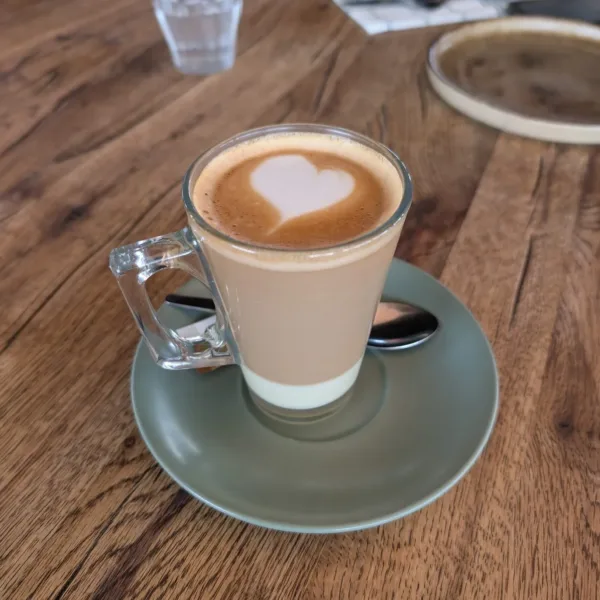
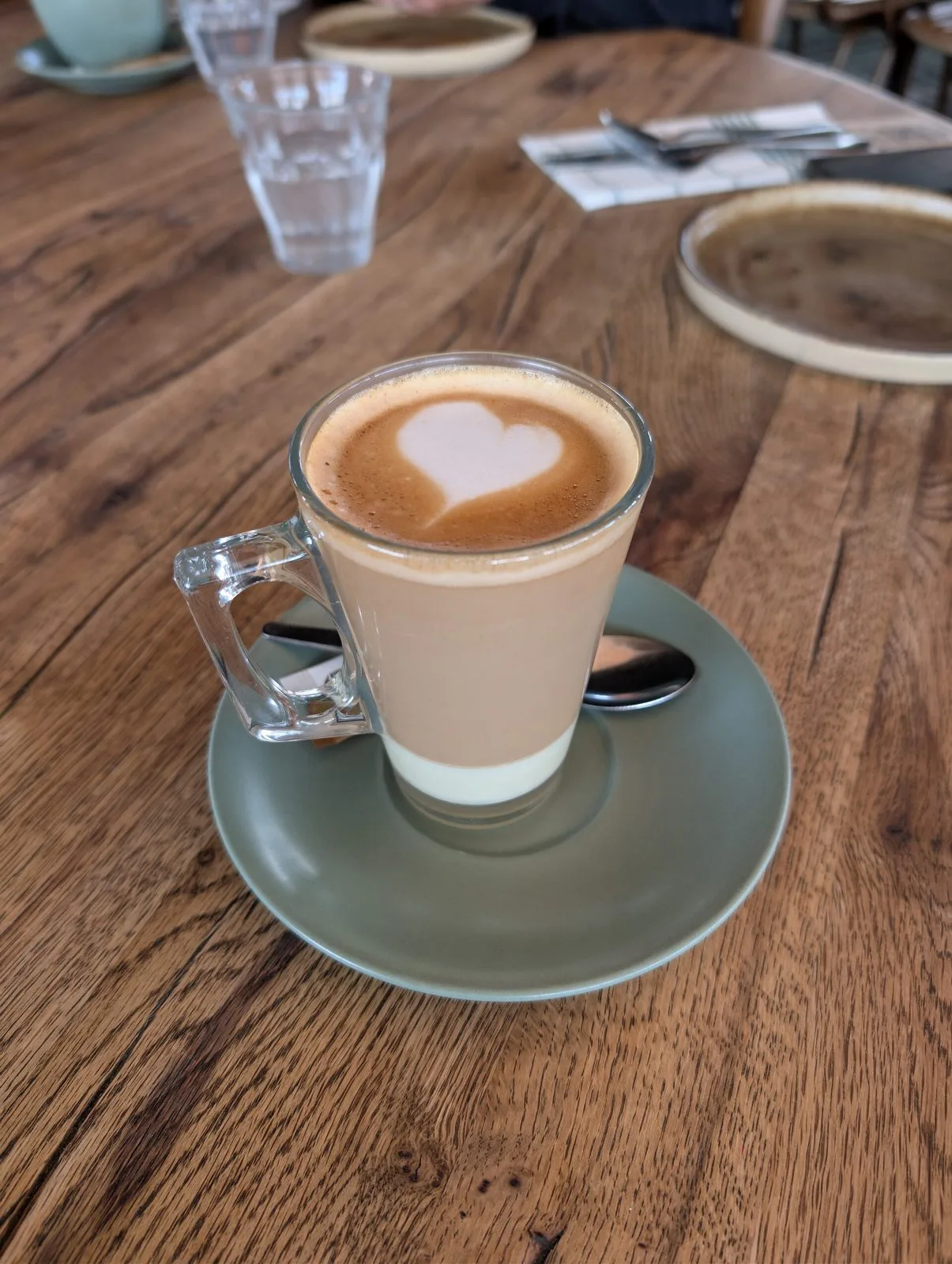
Café con leche (“coffee with milk”) is Spain’s standard milky coffee: a strong espresso mixed with hot milk in roughly equal amounts. It is served in a cup or, in many traditional bars, a small handle-less glass (vaso). The milk is heated with the steam wand but not built into a foamy cap, so the result is smooth and milky rather than frothy, somewhere between a cortado and a latte.
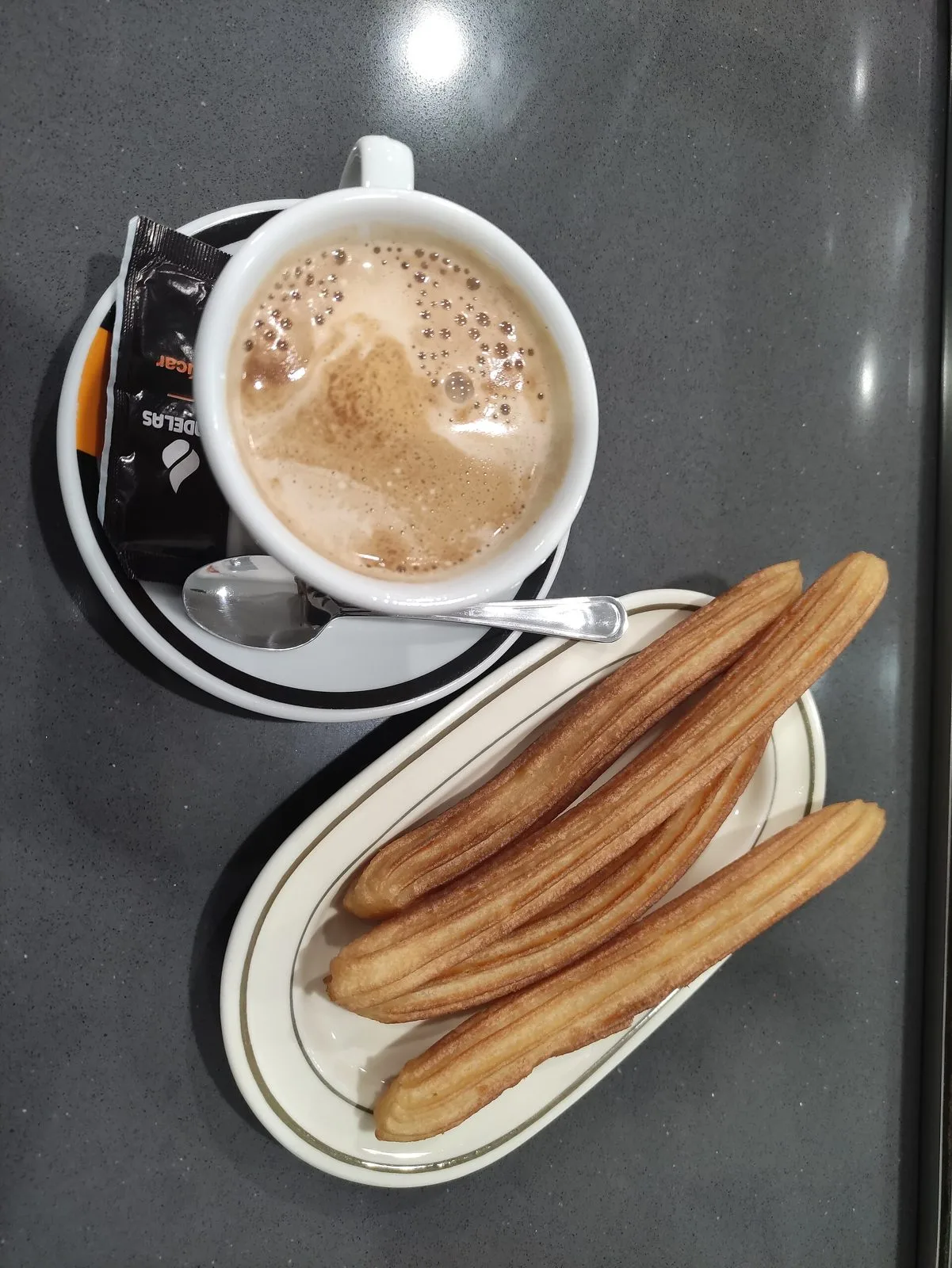
In Spain it’s mainly a morning drink: a quick one at home, then another at the bar mid-morning with breakfast or a snack. Waiters may ask whether you want the milk hot, cold or warm (caliente, fría or templada), and sugar comes in packets on the side. The coffee in traditional bars is often torrefacto, roasted with sugar, which gives it a darker, more bitter edge that the milk softens.
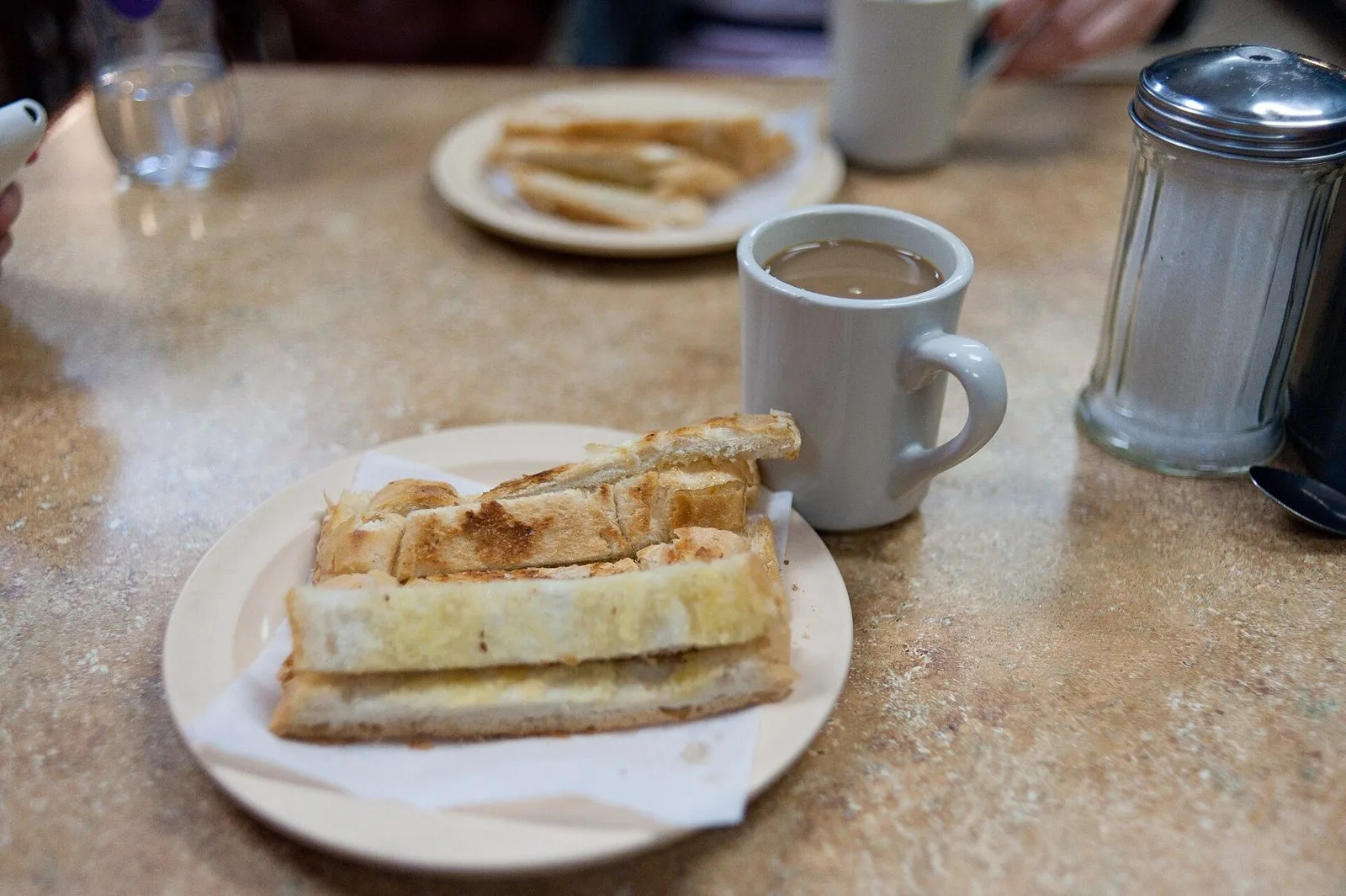
The drink travelled across the Spanish-speaking world. In Cuba, Puerto Rico and Cuban Miami, café con leche is usually made with sweetened espresso and is a breakfast essential, often with buttered toast for dipping.
In the cup
- Hot milk 50%
- Espresso 50%
Ingredients
- Freshly pulled espressosingle or double (≈ 30–60 ml)
- Whole milk≈ 60–120 ml
- Sugar (optional)to taste
How to make it
You needEspresso machine with steam wand (or a moka pot and saucepan), small glass or cup
RatioAbout 1 : 1 espresso to milk; a café con leche en vaso or breakfast version has more milk
-
Pull an espresso (or brew strong coffee in a moka pot) into a glass or cup.
-
Heat the milk with the steam wand or in a pan until hot but not boiling, without building much foam.
-
Pour the hot milk over the coffee in roughly equal measure.
-
Stir, then add sugar to taste.
Origin & history
Coffee with milk is an old European habit, and café con leche came to Spain’s bars from there; its exact origin is unclear. Today it is the most common way Spaniards drink coffee in the morning.
The coffee itself was shaped by history. Torrefacto roasting, in which sugar is caramelised onto the beans, became widespread around the time of the Spanish Civil War, when coffee was scarce, and many traditional bars still use it – one reason milk is so popular in Spanish coffee.
The drink spread with the Spanish language to Latin America and the Caribbean. In Cuba and Puerto Rico it is typically made with sweetened coffee, and in South Florida Cuban cafés sell it from walk-up windows known as ventanitas.
Variations
- Cortadoespresso “cut” with a small splash of milk (Spain)
- Manchado / leche manchadamostly milk, “stained” with a little coffee (Spain)
- Café con leche cubanosweetened Cuban espresso with hot milk, often with buttered toast (Cuba / Miami, USA)
- Clarito / oscuritolighter with more milk, or darker with less (Spain and Latin America)
- Café bombónespresso with sweetened condensed milk (Spain)
Good to know
You may be asked “¿caliente o fría?” – hot or cold milk. Warm (templada) makes it easy to drink quickly.
Sugar is not added for you in Spain; it comes in packets on the side.
Want more coffee and less milk? Ask for a cortado. Mostly milk? Ask for a manchado.
Specialty cafés serve it without torrefacto beans, which makes it noticeably less bitter.
In summer, order a café con hielo – coffee with a separate glass of ice to pour it over.