Ristretto
Caffè ristretto (French: café serré) Say ree-STRET-toh
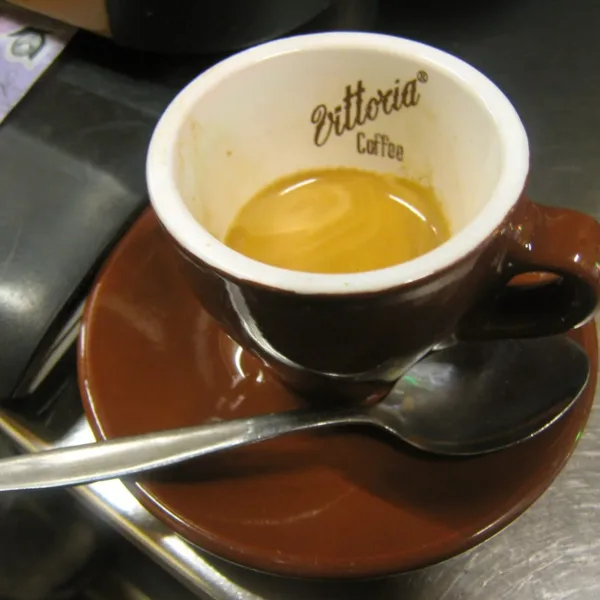
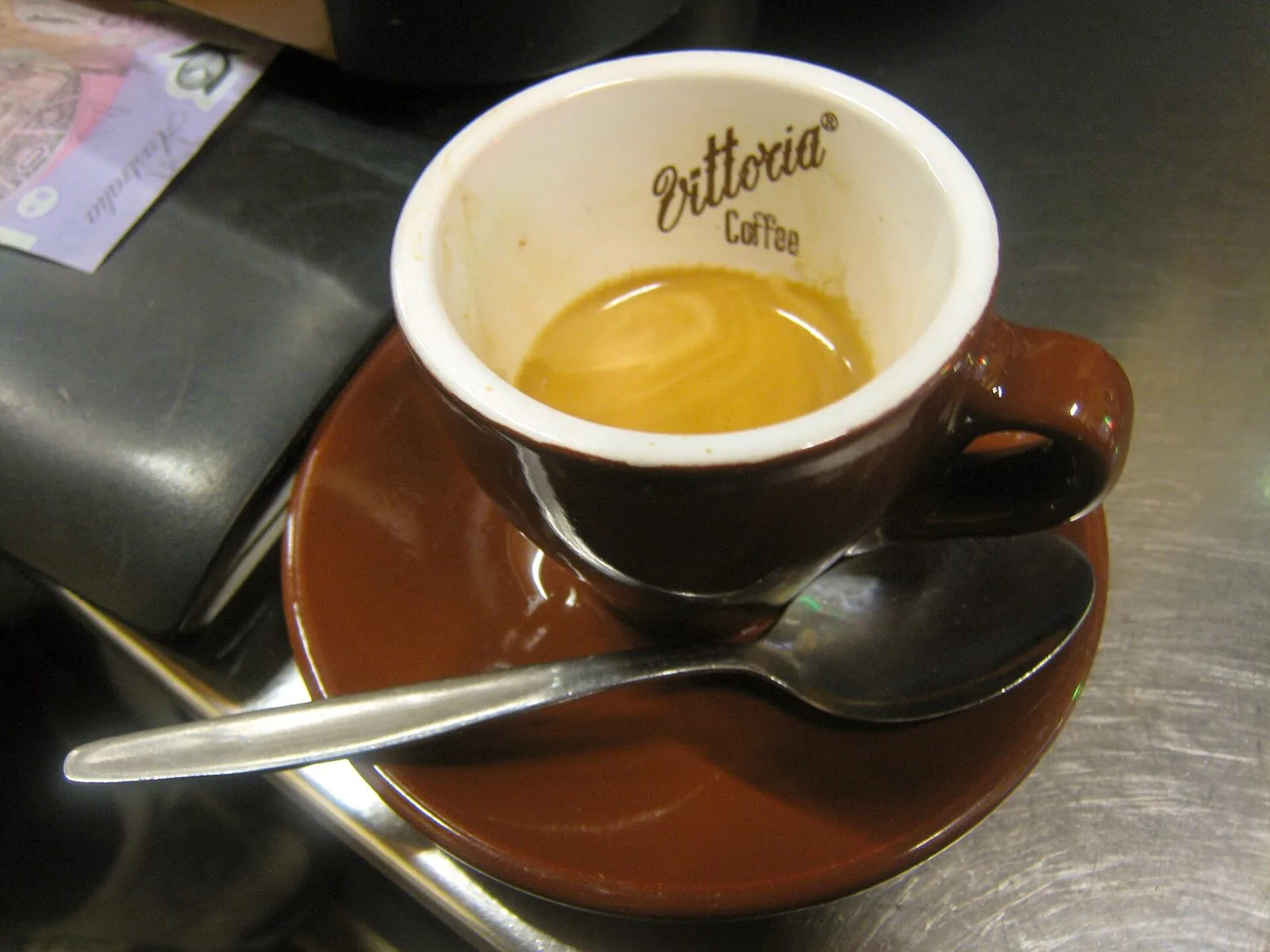
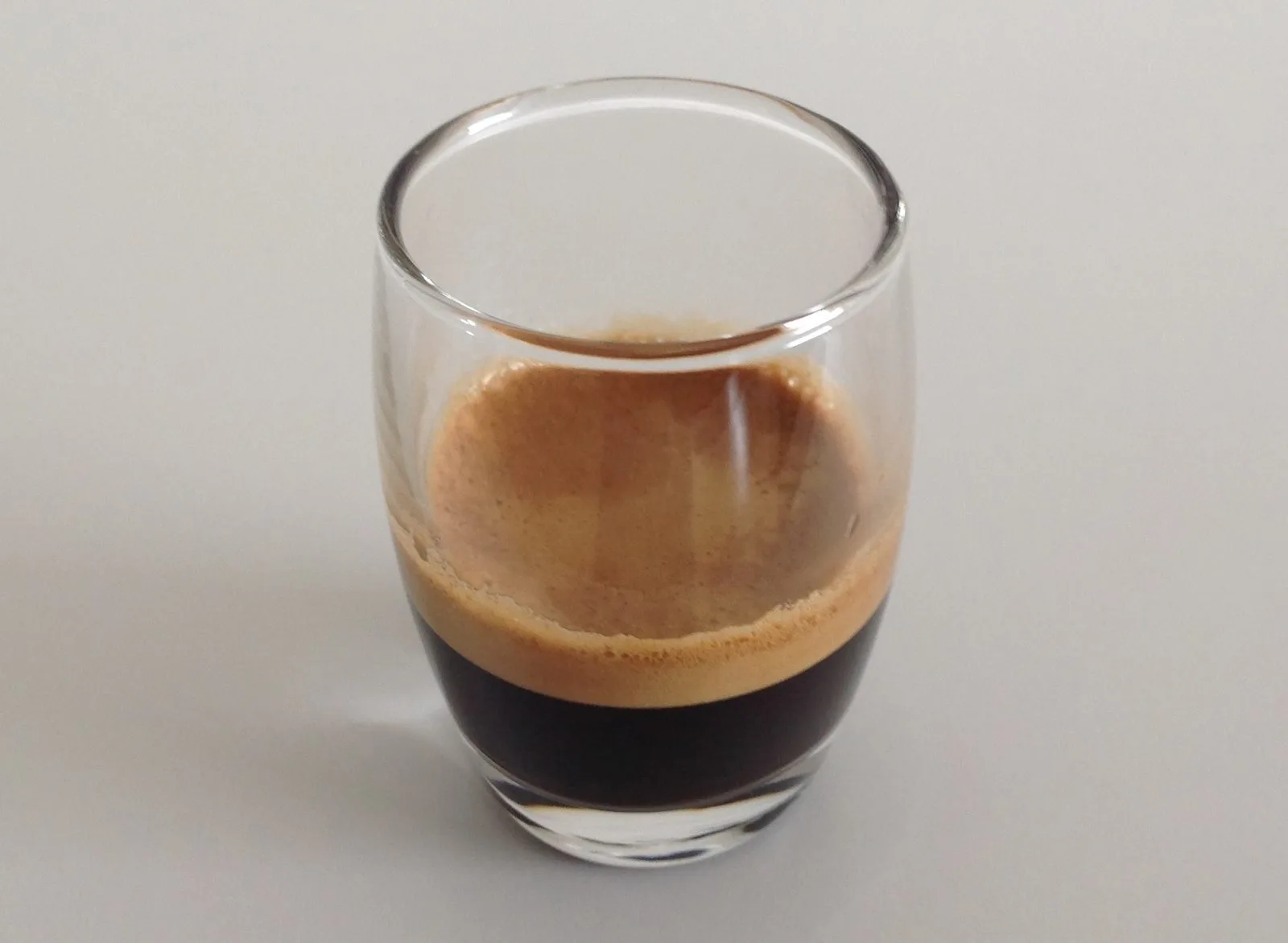
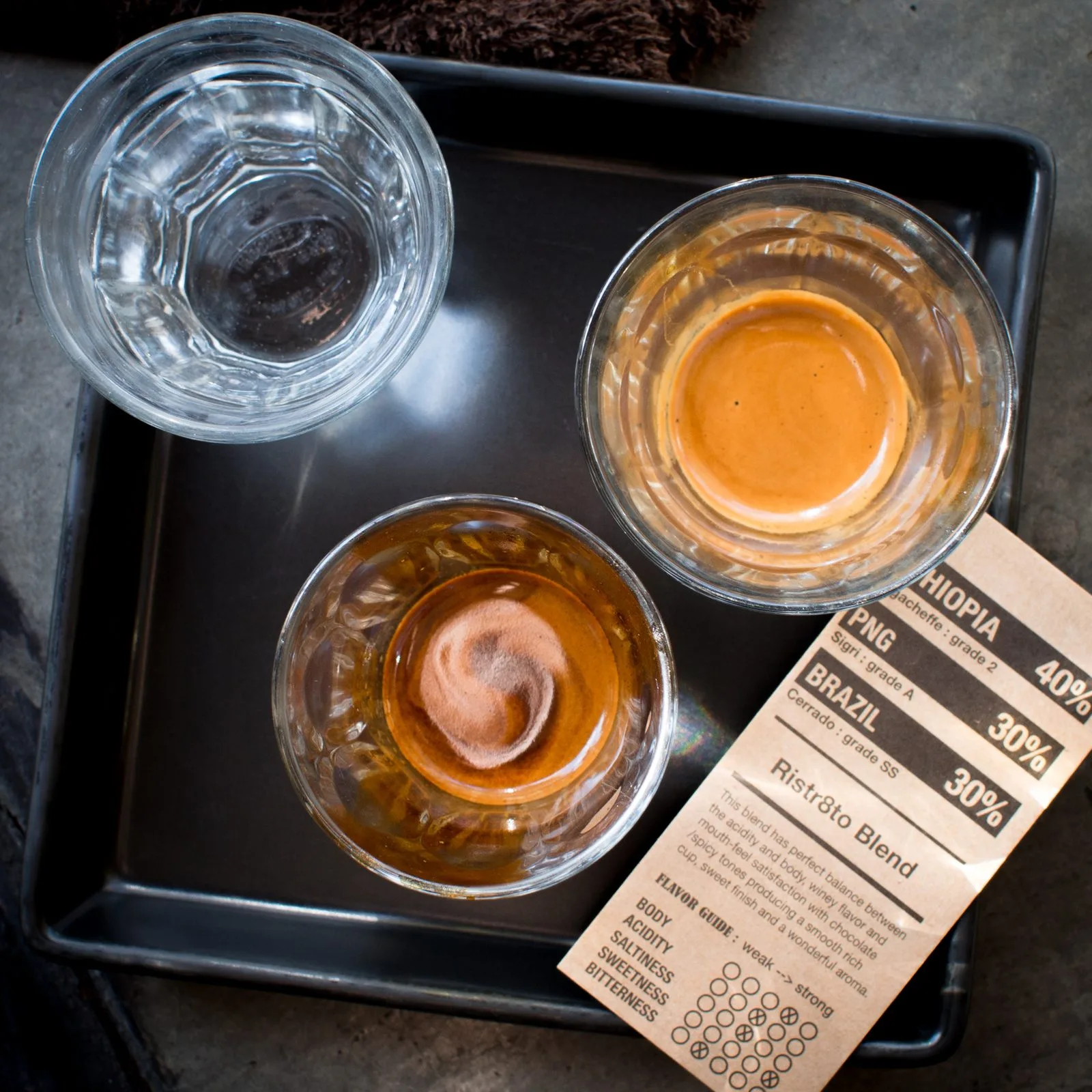
The shortest espresso: about 15–20 ml from a single dose (or ≈ 20–30 ml from a double), pulled with a finer grind so that only the first, sweetest part of the extraction ends up in the cup. Intense, thick and surprisingly smooth.
- ServedHot
- In EnglishRestricted (short) espresso
- TastesBold, Rich, Sweet
About Ristretto
A ristretto – Italian for “restricted” or “narrowed” – is an espresso made with the same amount of coffee as a normal shot but only about half the water. The result is a very small, very concentrated shot: roughly 15–20 ml from a single dose, or about 20–30 ml from a double basket.
Because the shot stops early, the cup holds mostly the compounds that dissolve first – sugars, acids and aromatic oils – and fewer of the slower, harsher ones that come at the end of a long extraction. That is why a good ristretto tastes bolder and heavier than an espresso yet often sweeter and less bitter, with notes of caramel and dark chocolate and a long aftertaste.
In Italy you can ask for un caffè ristretto at any bar. In speciality coffee, especially in Australia and the US, ristretto shots are also used as the base for small milk drinks such as the piccolo and many flat whites, where the concentrated coffee cuts through the milk without tasting harsh.
In the cup
- Crema 30%
- Ristretto 70%
Ingredients
- Freshly ground espresso coffee (very fine grind)7–9 g (single) or 14–20 g (double)
- Filtered water≈ 15–20 ml in the cup per single
- Sugar (optional)to taste
How to make it
You needEspresso machine with portafilter, burr grinder, tamper, small pre-warmed cup
RatioRoughly 1:1 to 1:1.5 coffee to liquid by weight (e.g. 18 g in, ≈ 18–25 g out), against about 1:2 for a normal espresso
-
Warm the machine and the cup.
-
Grind your usual espresso dose a notch finer than normal, just before brewing.
-
Dose, level and tamp firmly and evenly.
-
Start the shot and stop it at about half the usual volume – ≈ 15–20 ml for a single – after roughly 20–30 seconds.
-
Serve straight away, before the crema fades.
Origin & history
The ristretto grew out of everyday Italian bar practice rather than a single invention: once lever and pump machines made modern espresso possible after the Second World War, customers could ask for their coffee shorter (ristretto) or longer (lungo) than the standard shot. No inventor or date is recorded.
Outside Italy, the ristretto gained a following in speciality coffee from the 1990s. David Schomer of Espresso Vivace in Seattle is often credited with championing the short double shot in the US, aiming to keep the sweetness and aroma of the roast while leaving behind the bitter tail of the extraction. Australian cafés adopted ristretto shots widely, particularly for small milk drinks such as the piccolo.
Variations
- Double ristrettoa ristretto pulled from a double dose, the speciality-café standard (worldwide)
- Café serréthe French name for a short, tight espresso (France)
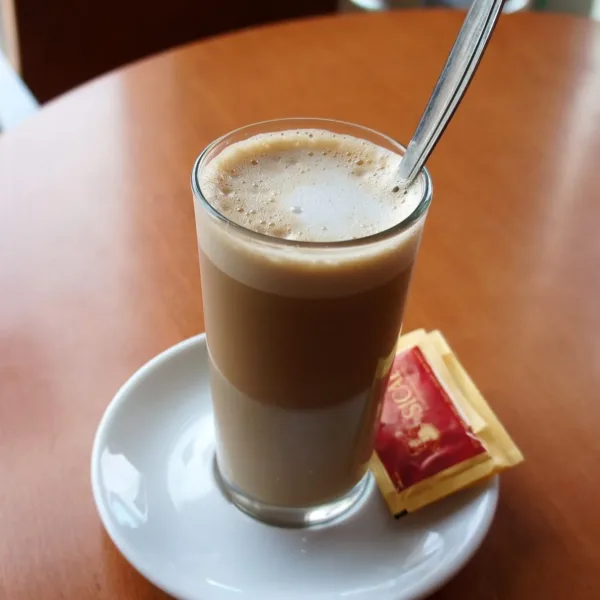
- Piccoloa ristretto topped with a little steamed milk in a small glass (Australia)
- Ristretto-based flat whitemany Australian and New Zealand cafés build their flat whites on ristretto shots (Australia / New Zealand)
Good to know
A proper ristretto is usually made with a finer grind, not just by stopping a normal shot early – the coffee should still flow slowly for 20–30 seconds.
Drink it immediately: with so little liquid, it cools and loses its crema very quickly.
In Australia and many speciality cafés a ristretto is a double by default; in Italy it is normally a single.
If you find espresso too bitter, try a ristretto – many people are surprised by how sweet it tastes.