Latte Macchiato
Latte macchiato Say LAH-tay mahk-kee-AH-toh
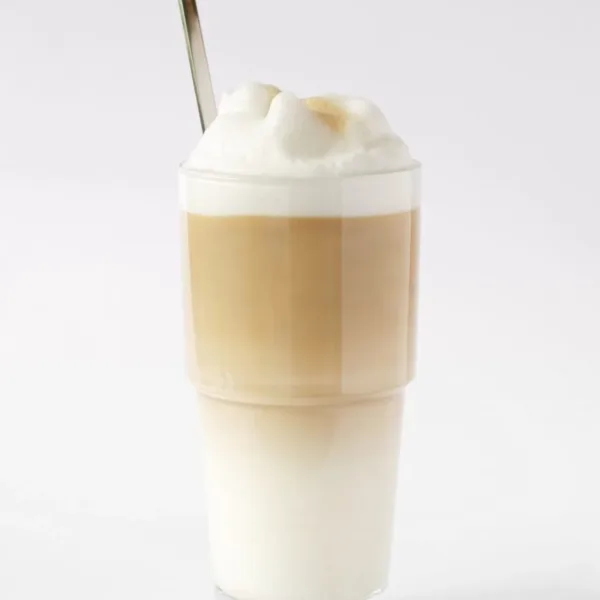
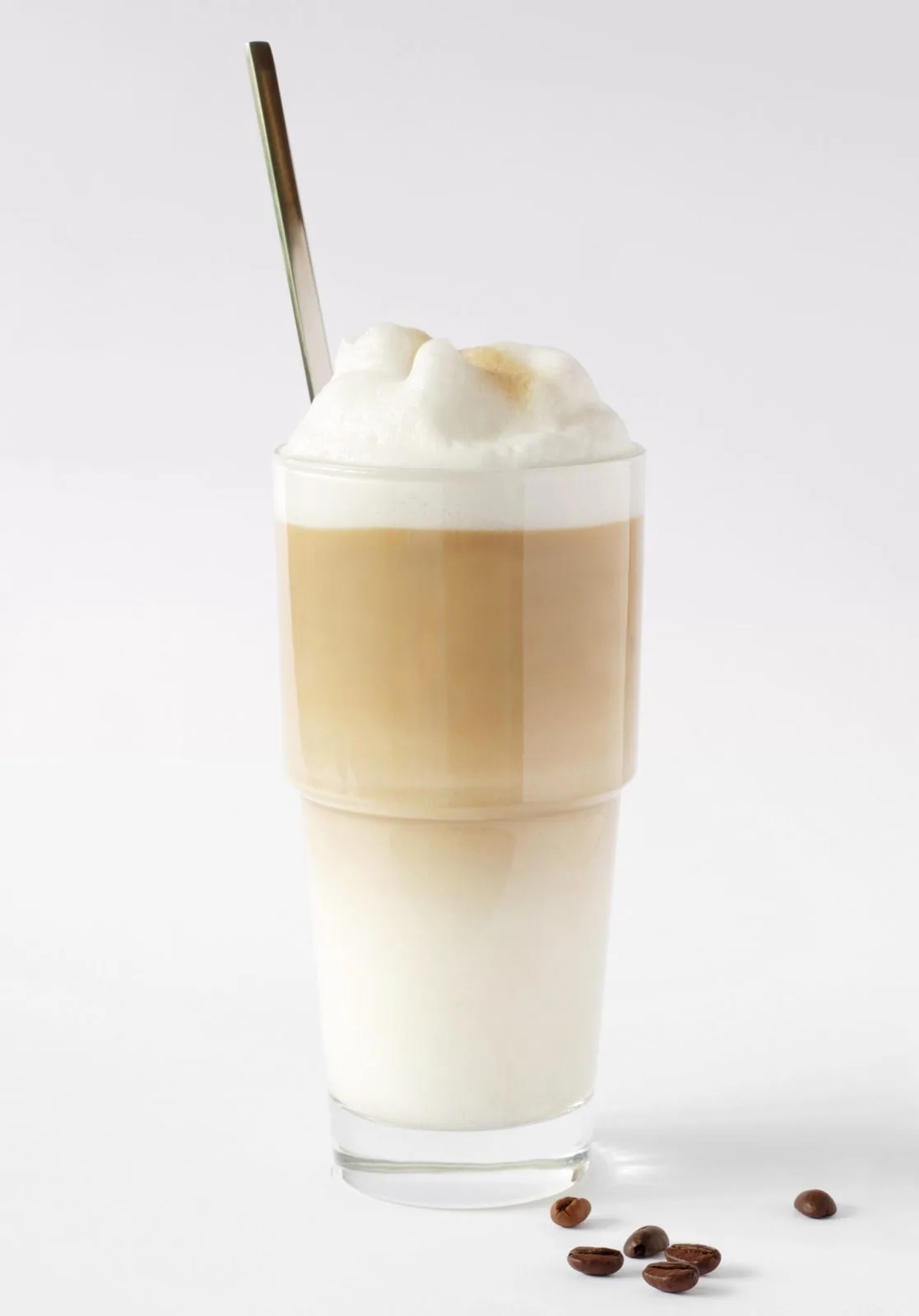
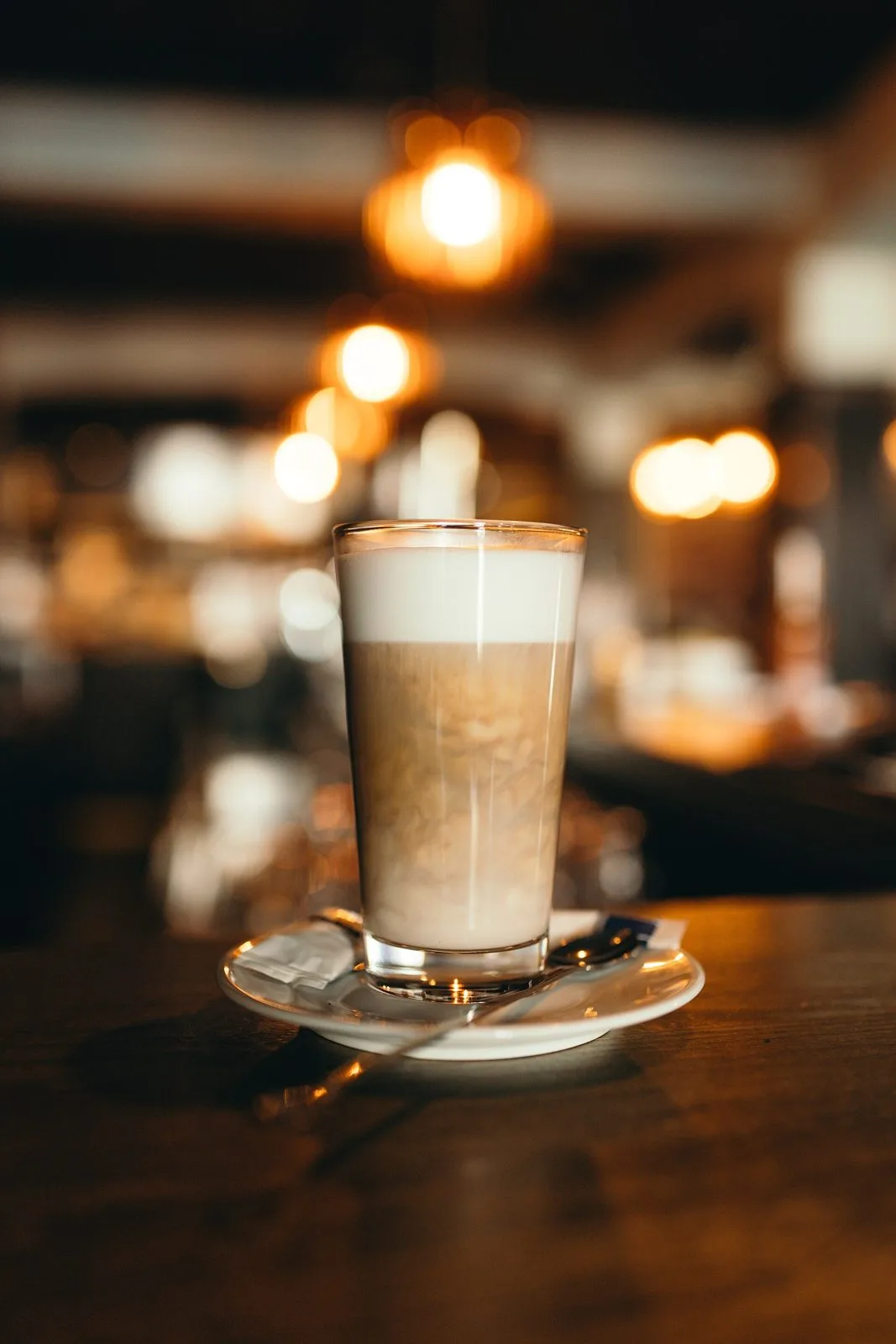
A tall glass of steamed and foamed milk “stained” by a shot of espresso poured in last. Served in a clear glass so you can see the layers – milk at the bottom, coffee in the middle, foam on top – it is soft, milky and gently sweet.
- ServedHot & Iced
- In EnglishStained milk
- TastesCreamy, Smooth, Sweet
About Latte Macchiato
Latte macchiato means “stained milk”. Unlike a caffè latte, which starts with coffee and adds milk, a latte macchiato starts with a tall glass of hot milk and thick foam, and a shot of espresso is poured in last. The espresso sinks through the light foam but floats on the denser milk, so the glass shows three bands: white milk, a brown coffee layer and a cap of foam marked with a spot of crema.
It is milder than a latte – usually a single shot (≈ 25–30 ml) to about 200 ml of milk – with more foam and a soft, sweet milkiness. You can drink it layered or stir it first; many people stir in a little sugar or syrup.
In Italy it is an occasional order, traditionally associated with children and breakfast. It became hugely popular in German-speaking countries and elsewhere in Europe from the 1990s, where the layered tall glass is a café classic.
In the cup
- Milk foam 35%
- Espresso 15%
- Steamed milk 50%
Ingredients
- Whole milk, cold≈ 200 ml
- Freshly brewed espresso1 shot (≈ 25–30 ml)
- Sugar or syrup (optional)to taste
- Cocoa or cinnamon (optional)a pinch, to dust
How to make it
You needEspresso machine with steam wand (or milk frother), tall heat-resistant glass, long spoon
RatioAbout 1 part espresso to 6–8 parts milk and foam
-
Steam and froth the milk to about 55–65 °C, making plenty of light foam.
-
Tap the jug and let it stand for a minute so the foam separates from the liquid milk.
-
Pour the milk into the tall glass to about two-thirds, then spoon the foam on top.
-
Brew the espresso and pour it slowly into the centre of the foam, so it settles between milk and foam.
-
Serve with a long spoon and sugar on the side.
Origin & history
The latte macchiato takes its name from the older caffè macchiato, an espresso “stained” with a little milk; here the logic is reversed and the milk is stained with coffee. In Italy it is traditionally described as a mild, milky drink often given to children, though when it first appeared is not recorded.
Its international popularity came later. From the 1990s it became a café staple north of the Alps – above all in Germany and Austria – where the tall, layered glass became its signature, and home capsule and bean-to-cup machines later added dedicated “latte macchiato” settings.
Variations
- Iced latte macchiatocold milk and ice with espresso poured over the top (worldwide)
- Flavoured latte macchiatowith vanilla, caramel or hazelnut syrup in the milk (Germany / Austria / worldwide)
- Caffè lattecoffee first, then milk, a stronger mixed drink (Italy)
- Caffè macchiatothe reverse idea: espresso “stained” with a little milk foam (Italy)
Good to know
In Italy, “un latte” means just milk; say the full name, “latte macchiato”.
For clean layers, pour the espresso slowly into the middle of the foam, or over the back of a spoon.
Whole milk heated to about 55–65 °C gives the most stable foam and the clearest layers.
Use a long spoon – it is normal to stir it before drinking, or to eat a little of the foam first.
Don't confuse it with a caffè macchiato, which is an espresso with just a dash of milk foam.