Japanese Iced Coffee
アイスコーヒー (aisu kōhī) Say jap-uh-NEEZ ICED KOF-ee (Japanese: AI-su KOH-hee)
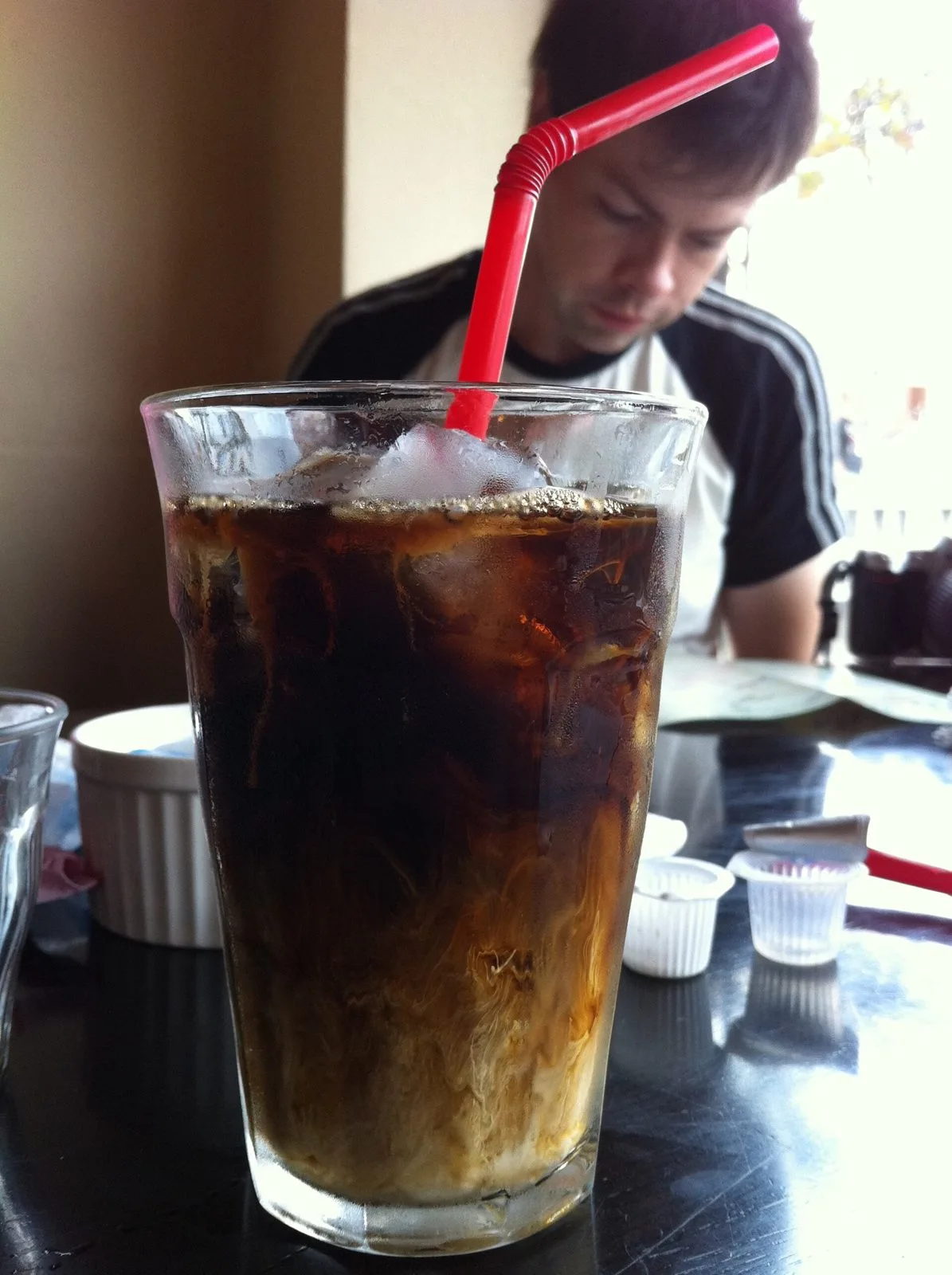
Pour-over coffee brewed with less hot water than usual directly onto a measured amount of ice. The ice chills and dilutes it to the right strength immediately, locking in aroma and bright, fruity flavours.
- ServedIced
- In EnglishJapanese-style iced coffee / flash-brewed coffee
- TastesBright, Fruity, Smooth
About Japanese Iced Coffee
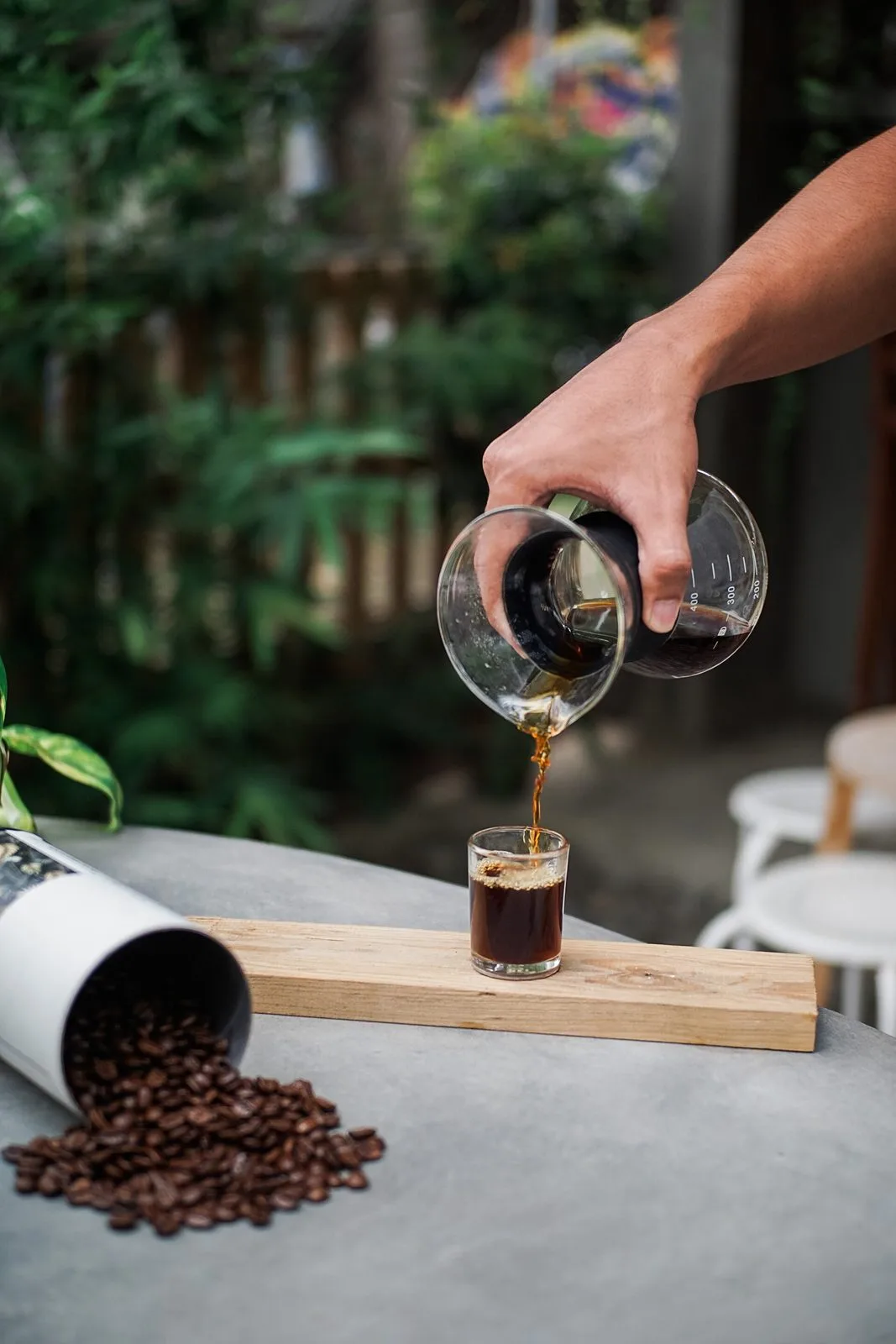
Japanese-style iced coffee is brewed hot and chilled instantly. Instead of pouring hot coffee over ice afterwards, part of the brewing water is replaced by ice that sits in the jug or carafe below the dripper. The coffee drips straight onto it, cools as it is extracted and ends up at drinking strength once the ice has melted.
Because the coffee is extracted hot, it keeps the aromatic, bright and often fruity notes that slow cold brew tends to lose, and it has a lighter body. Because it is chilled at once, it avoids the stale, sour taste of coffee that has cooled slowly. And it takes only as long as a normal pour-over – a few minutes rather than the 12–24 hours of cold brew.
Iced coffee has been on the menu in Japanese cafés since the 1920s and became widespread after the Second World War. In English-speaking speciality coffee the hot-onto-ice technique is known as “Japanese iced coffee” or “flash brew”, and it is now a summer staple of pour-over bars around the world.
In the cup
- Flash-chilled coffee 65%
- Ice 35%
Ingredients
- Ground coffee (medium-fine)≈ 30 g
- Hot water (≈ 93 °C)≈ 300 g
- Ice in the server≈ 120–200 g
- Fresh ice for servingto fill the glass
How to make it
You needPour-over dripper (V60, Kalita, Chemex), paper filter, server or carafe, kettle, scale, grinder
RatioNormal pour-over strength (≈ 1:15–1:16), with roughly 35–50% of the water weight replaced by ice – e.g. 30 g coffee, 300 g hot water, 120 g ice
-
Weigh the ice into the server or carafe and set the dripper on top.
-
Rinse the paper filter with hot water (pour that water away without wetting the ice), then add the coffee.
-
Pour a little hot water to bloom the grounds for about 30 seconds.
-
Pour the rest of the hot water slowly in circles until you reach the target weight.
-
Swirl the server until the ice has melted and the coffee is cold.
-
Pour into a glass over fresh ice.
Origin & history
Cold coffee drinks go back at least to the 1840s, when French soldiers in Algeria drank mazagran, coffee syrup mixed with cold water. Japan adopted iced coffee early: fashionable cafés were serving it by the 1920s, and it became a widespread café drink after the Second World War.
Japanese coffee culture developed several ways of making cold coffee, from slow cold-drip towers to mizudashi cold brew and brewing hot coffee directly onto ice. The last method is often described as having been used in Japan since the 1920s, though no single inventor is recorded.
The name “Japanese iced coffee” appears to have been coined outside Japan, as speciality coffee bars in North America and Europe embraced pour-over brewing and Japanese equipment such as Hario drippers. Today it is often marketed simply as “flash brew”.
Variations
- MizudashiJapanese cold brew, grounds steeped in cold water for about 12 hours (Japan)
- Kyoto-style cold dripiced water dripped slowly through coffee over many hours in tall glass towers (Japan)
- Flash brew batchthe same principle used in automatic brewers with extra coffee (USA and elsewhere)
- Iced coffee with gum syrup and milkthe classic Japanese kissaten way to sweeten it (Japan)
Good to know
Weigh both ice and water – the ice counts as part of the recipe, so a scale makes a big difference.
Make sure the coffee drips straight onto the ice from the start; that is what keeps it bright.
Use a slightly finer grind than for a hot pour-over to make up for the smaller amount of hot water.
Serve over fresh ice in a separate glass, so the brewing ice that has already melted isn't diluted further.